Add a header to begin generating the table of contents
Goal
- Write and design a narrative-focused video game project under the guidance of veteran narrative designers and other industry experts
- Improve narrative design skills and processes
- Develop an understanding of the collaborative processes between game writing, narrative design, and other disciplines
- Gather and implement feedback and analysis to produce a high-quality project
Overview
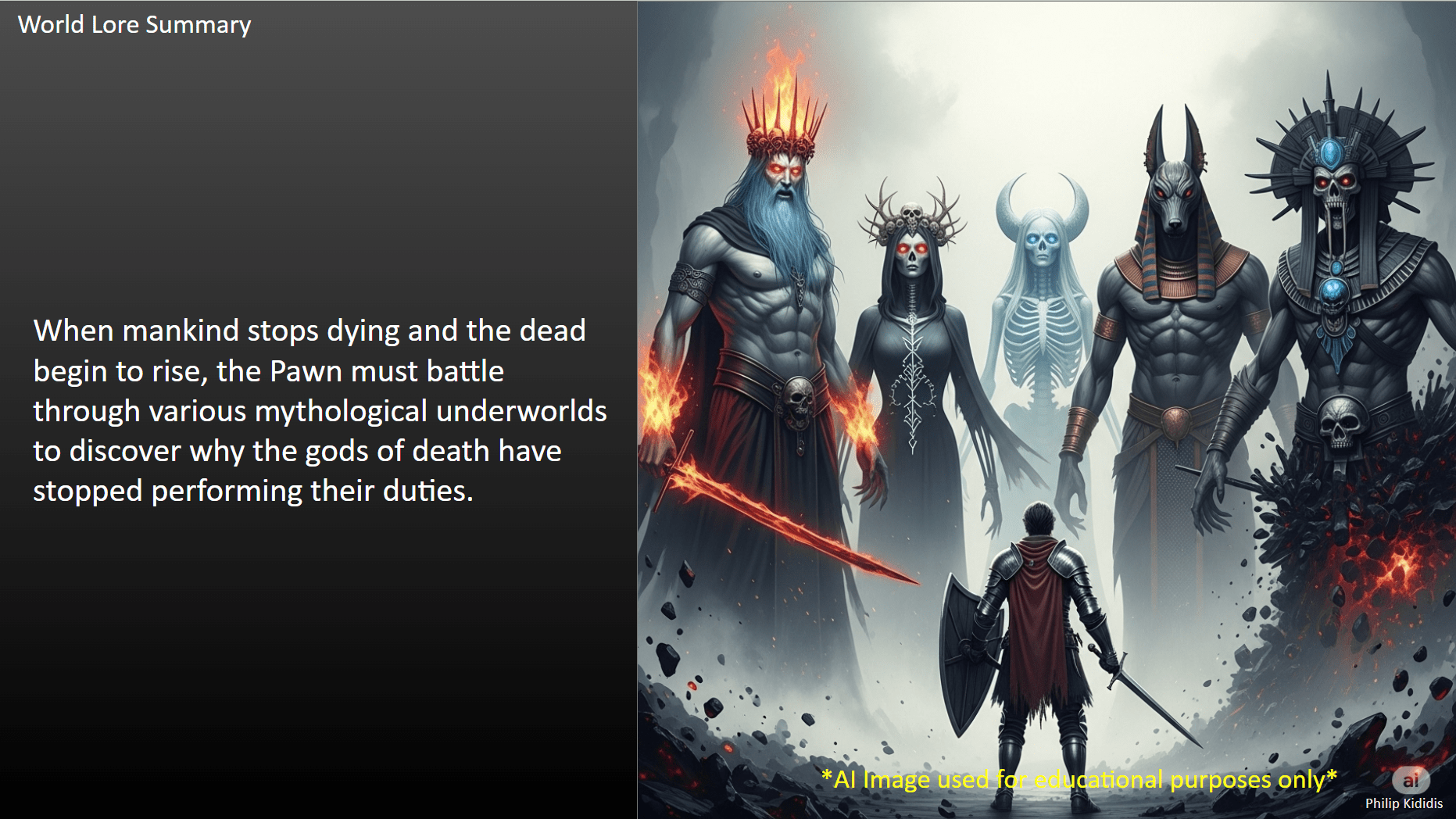
World Lore Summary
I created the original game concept for Mortal Gods, a dark fantasy souls-like RPG concept where players can explore the underworlds of various cultural mythologies and challenge the different gods of death in grueling yet rewarding combat.
When the gods of death are placed under a celestial curse, they go mad, effectively causing the underworlds to shut down. With nowhere to go, the spirits of the dead remain in the world of the living, creating havoc on a universal scale. The player character, also known as the Pawn, is tasked with traveling to each underworld to set the gods right and restore Divine Order.
Obviously, I did not create these gods or their stories, but I did design unique iterations of them while bringing them together into a single cohesive and immersive universe. In this universe, the gods themselves are at the mercy of higher beings: Order and Chaos, a hierarchy that features original locations and characters that are central to the game’s lore and the player’s experience.
In addition to original locations and characters, Mortal Gods features five mythological gods of death, each offering a unique underworld setting for the player to explore:
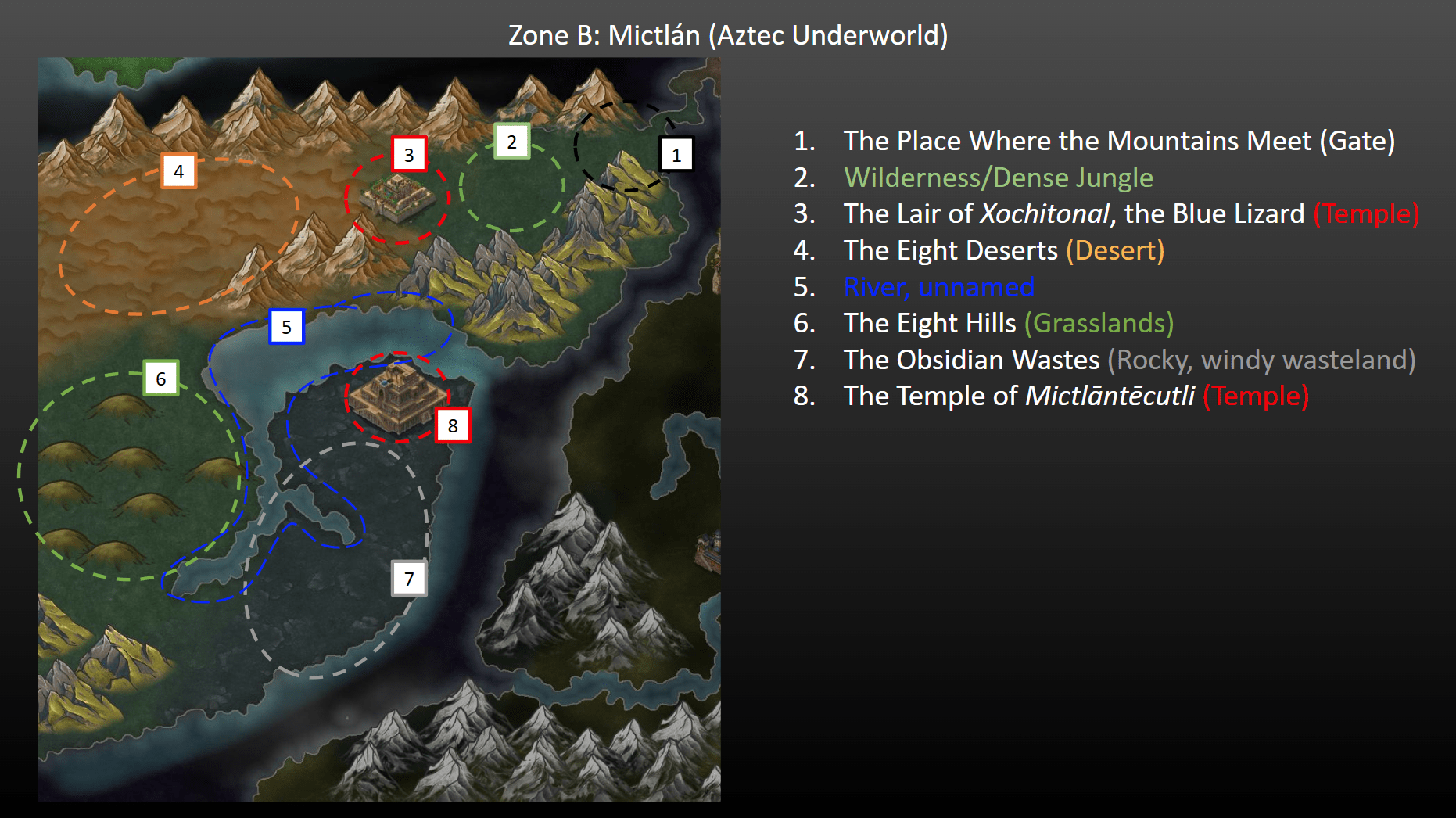
- Mictlāntēcutli, Mictlán (Aztec)
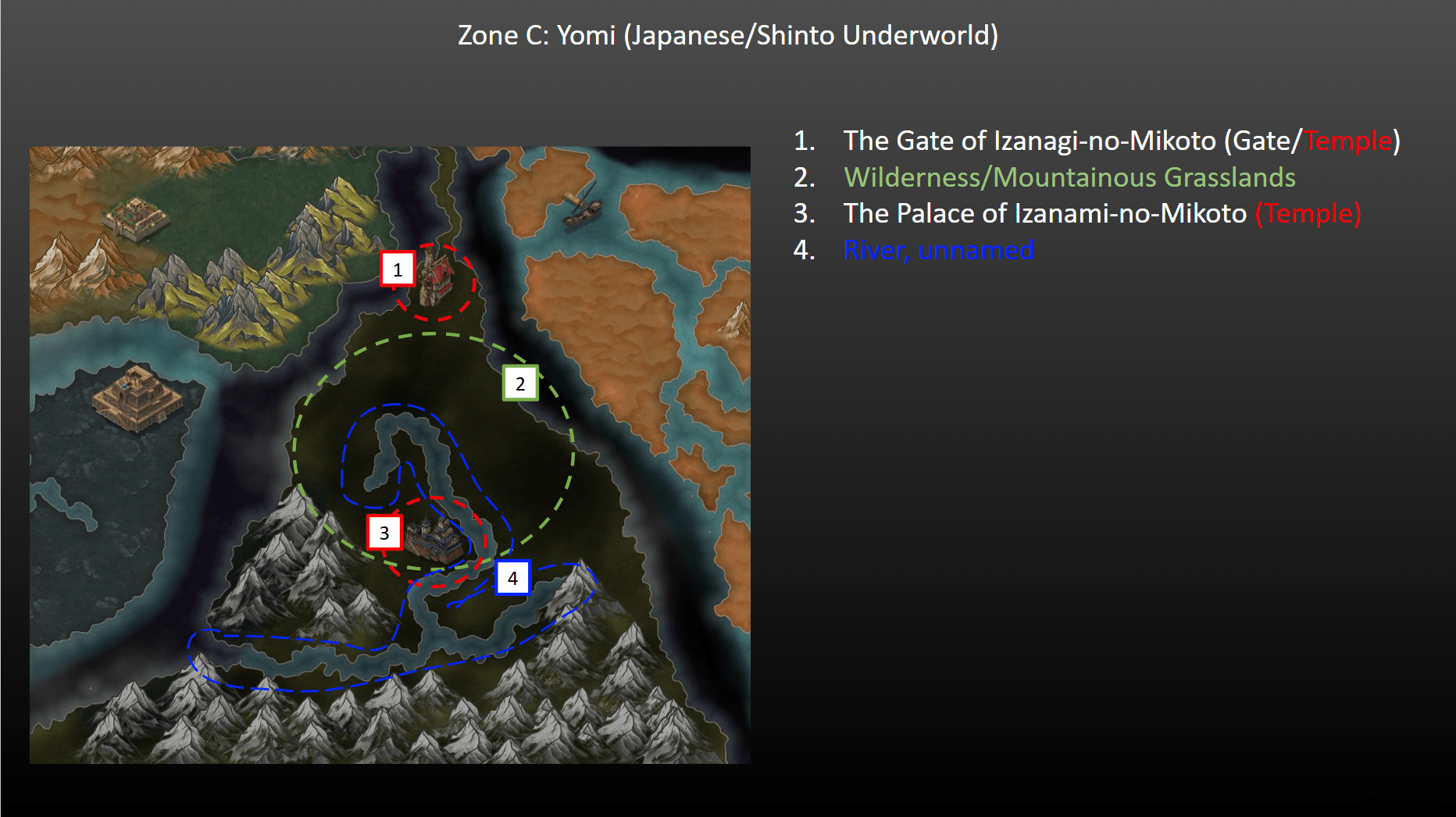
- Izanami-no-Mikoto, Yomi (Japanese)
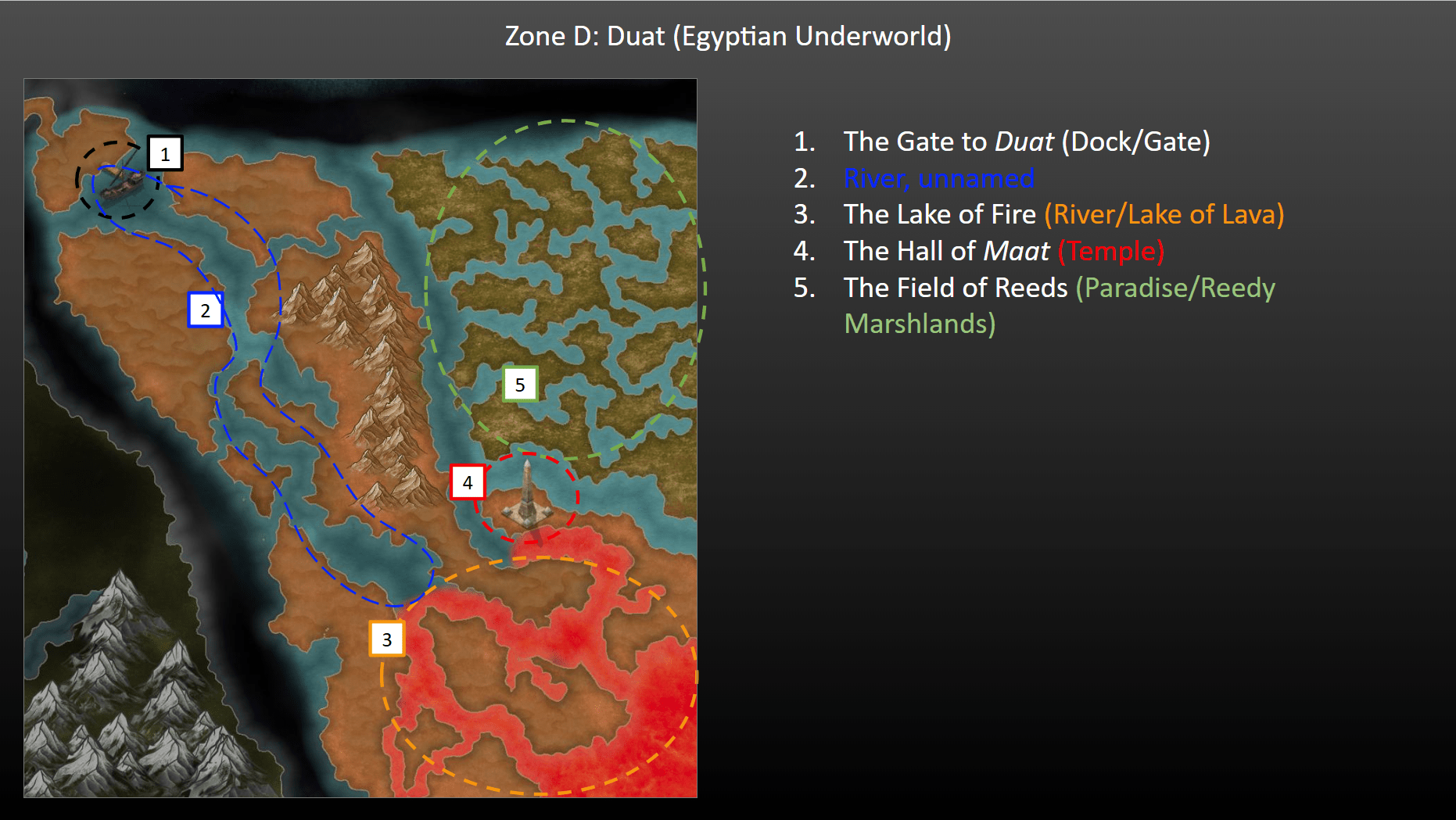
- Anubis, Duat (Egyptian)
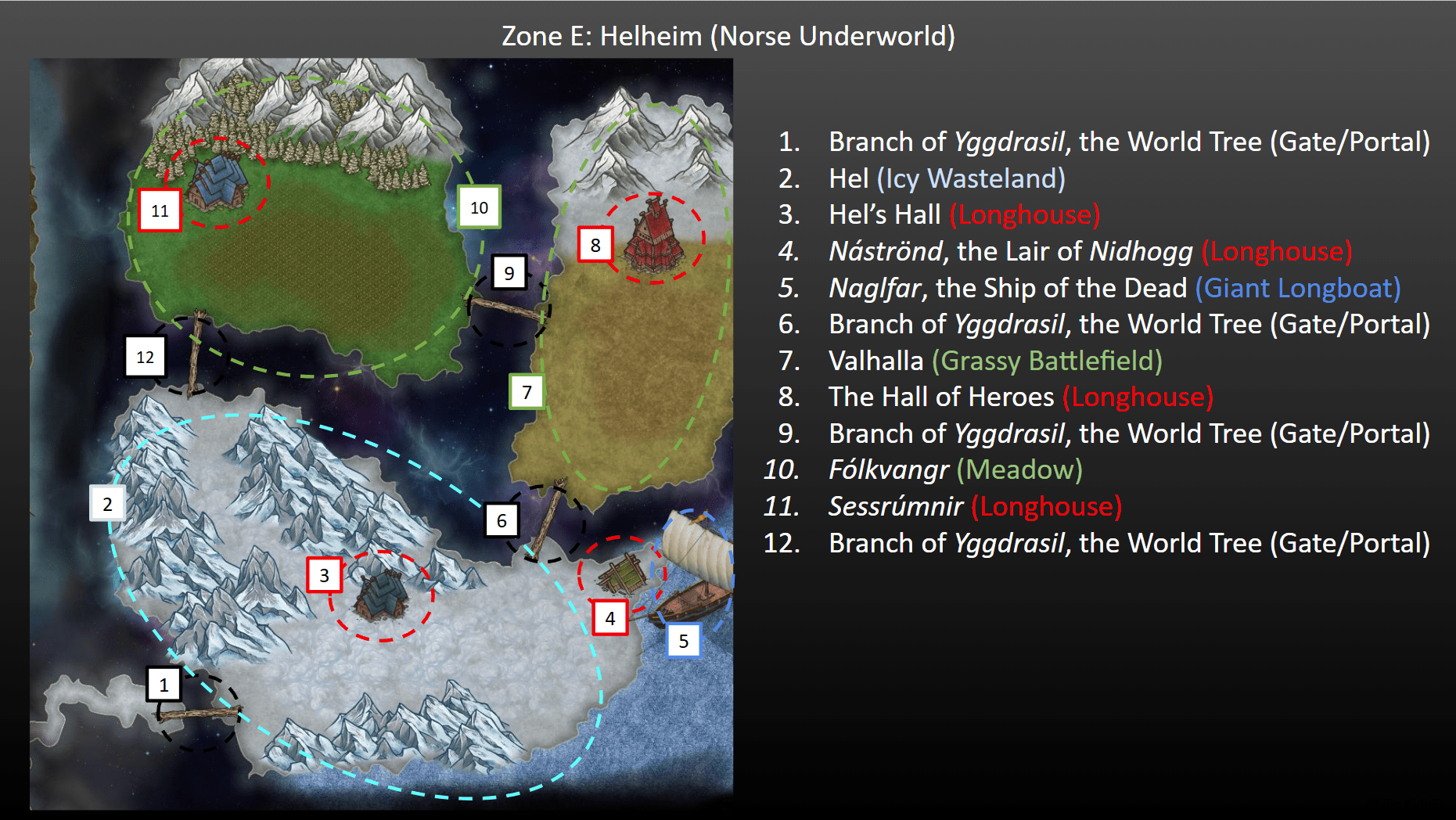
- Hel, Helheim (Norse)
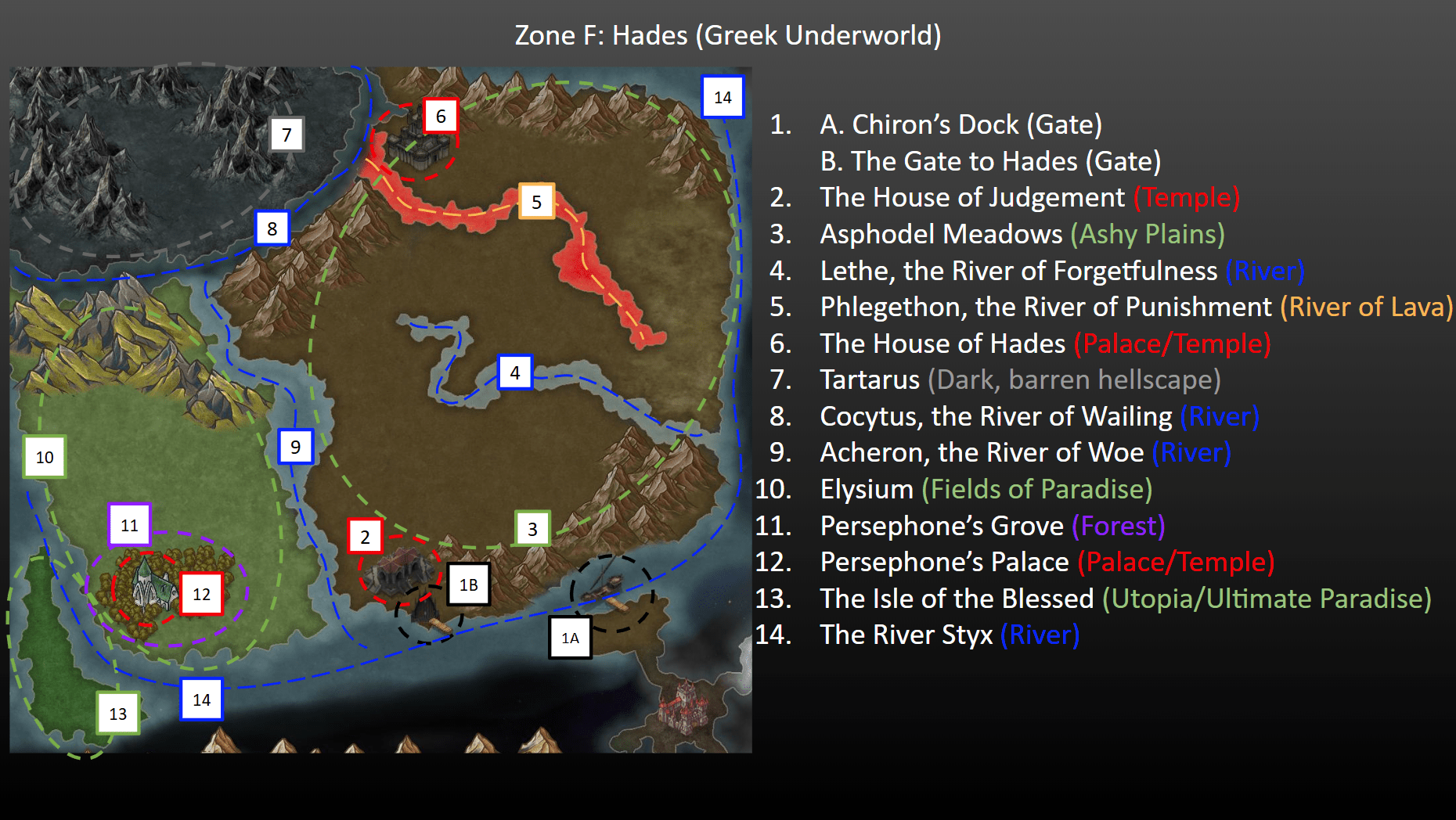
- Hades, Hades (Greek)
Note: Conceptually, this is only the beginning. While the five mythologies mentioned above provide plenty of content for a single game, there are still so many other gods and underworlds to explore, granting the potential for add-ons, DLCs, or sequels.
Character Design & Barks
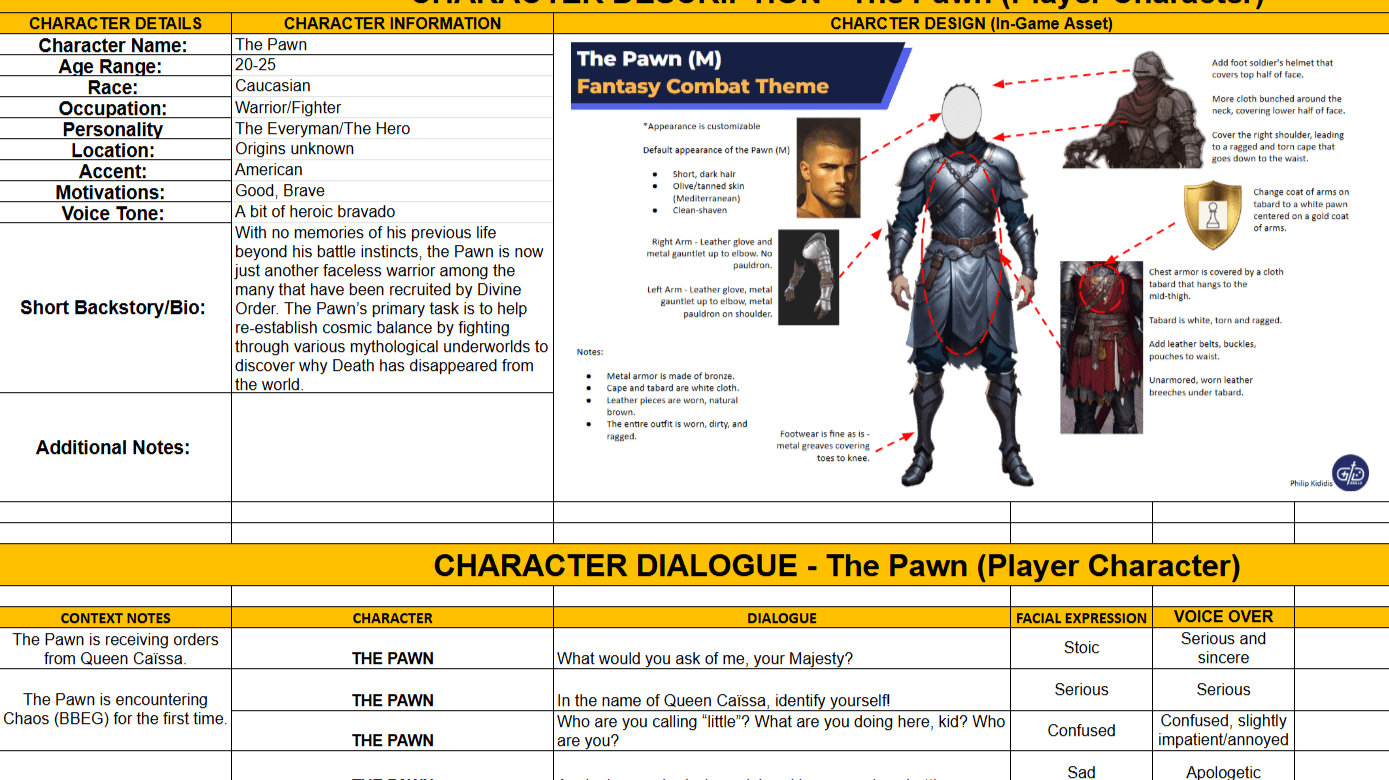
The Pawn
Player Character
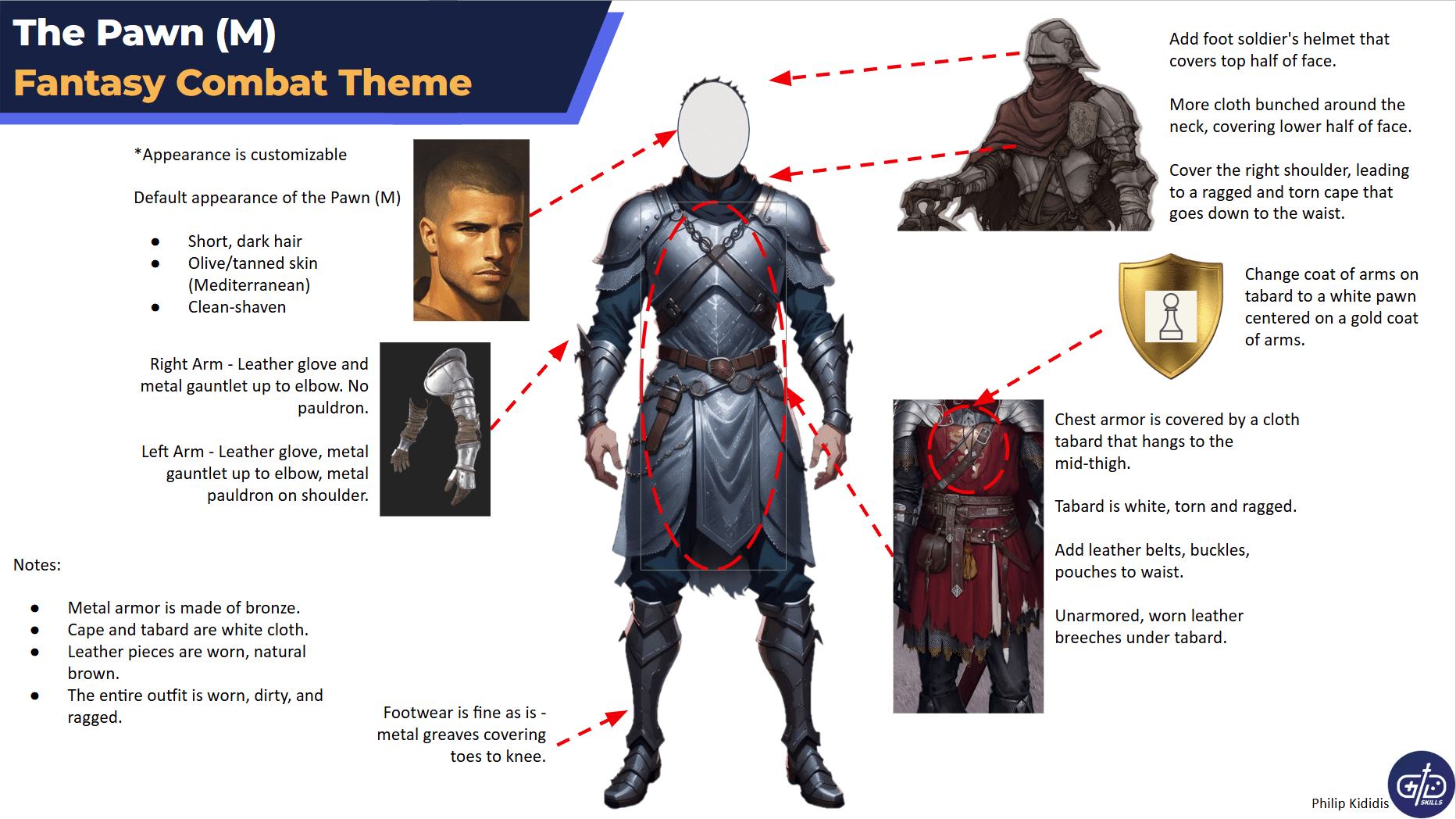
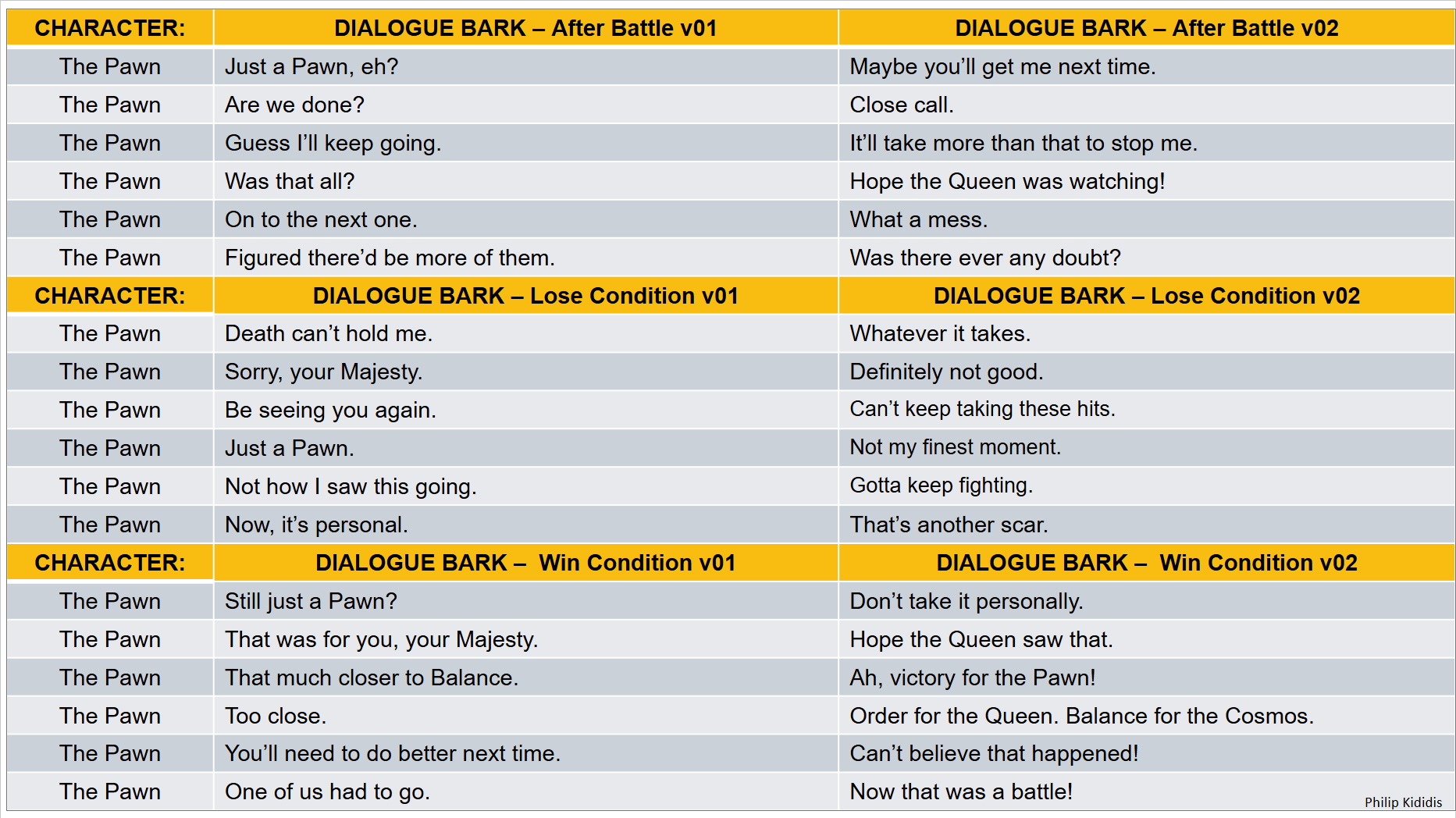
In Mortal Gods, the player takes the role of the Pawn – one of many otherwise nameless warriors with no memories beyond their fighting instincts. Pawns are summoned by Queen Caïssa to fight on her behalf in times of need.
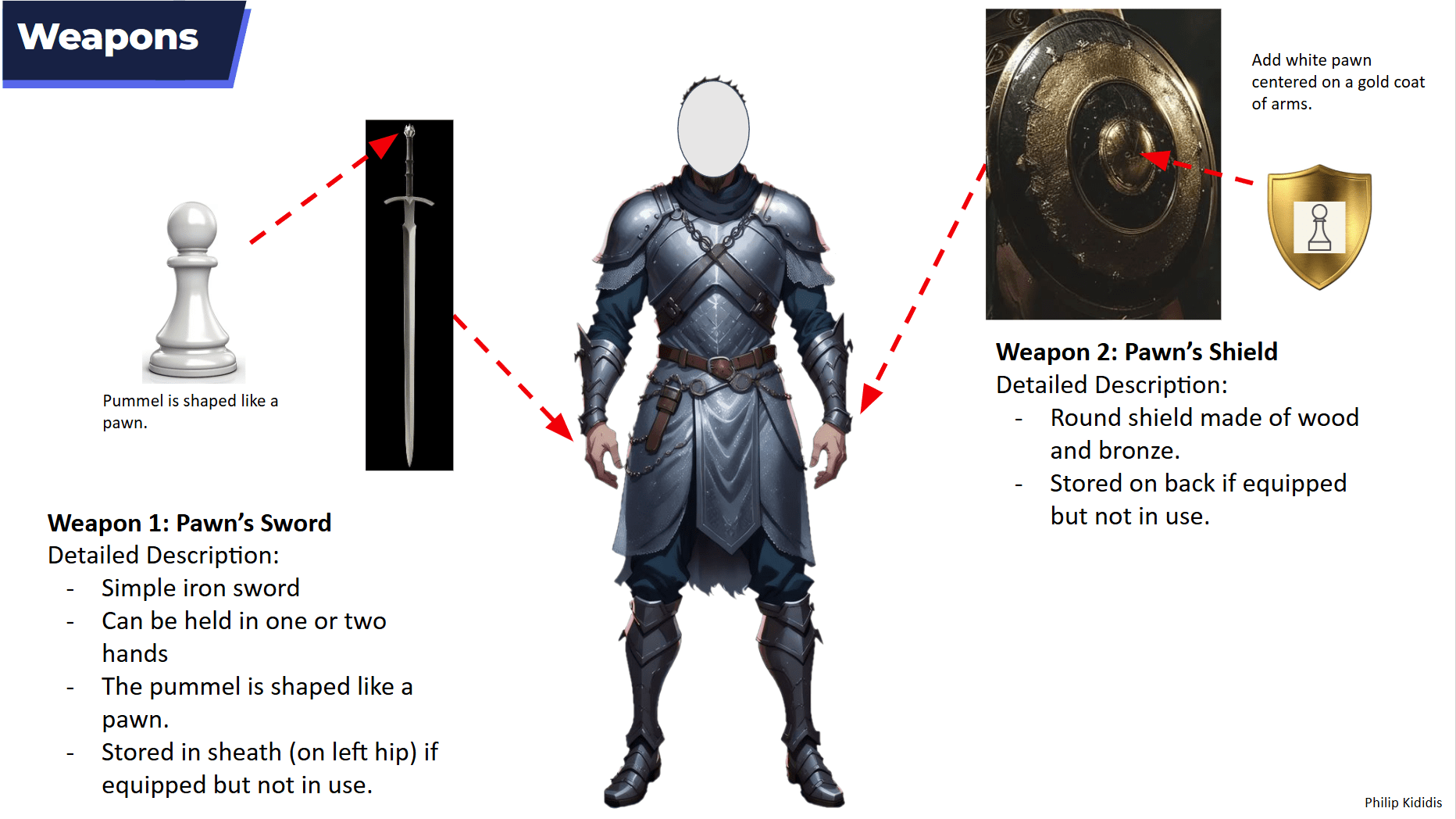
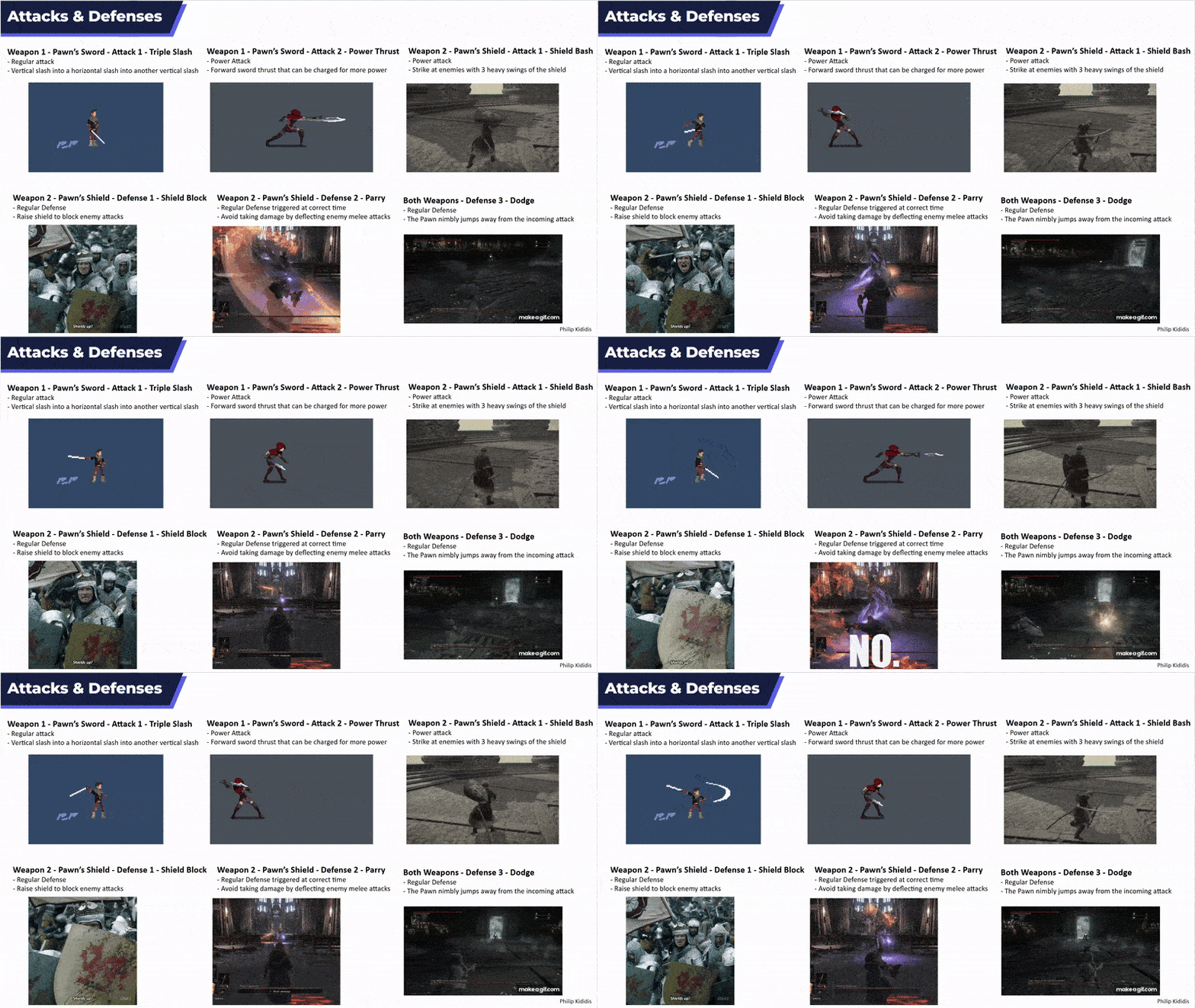
In an ideal world, the Pawn would be a customizable character. The example Pawn shown here displays the default appearance and weapon set.
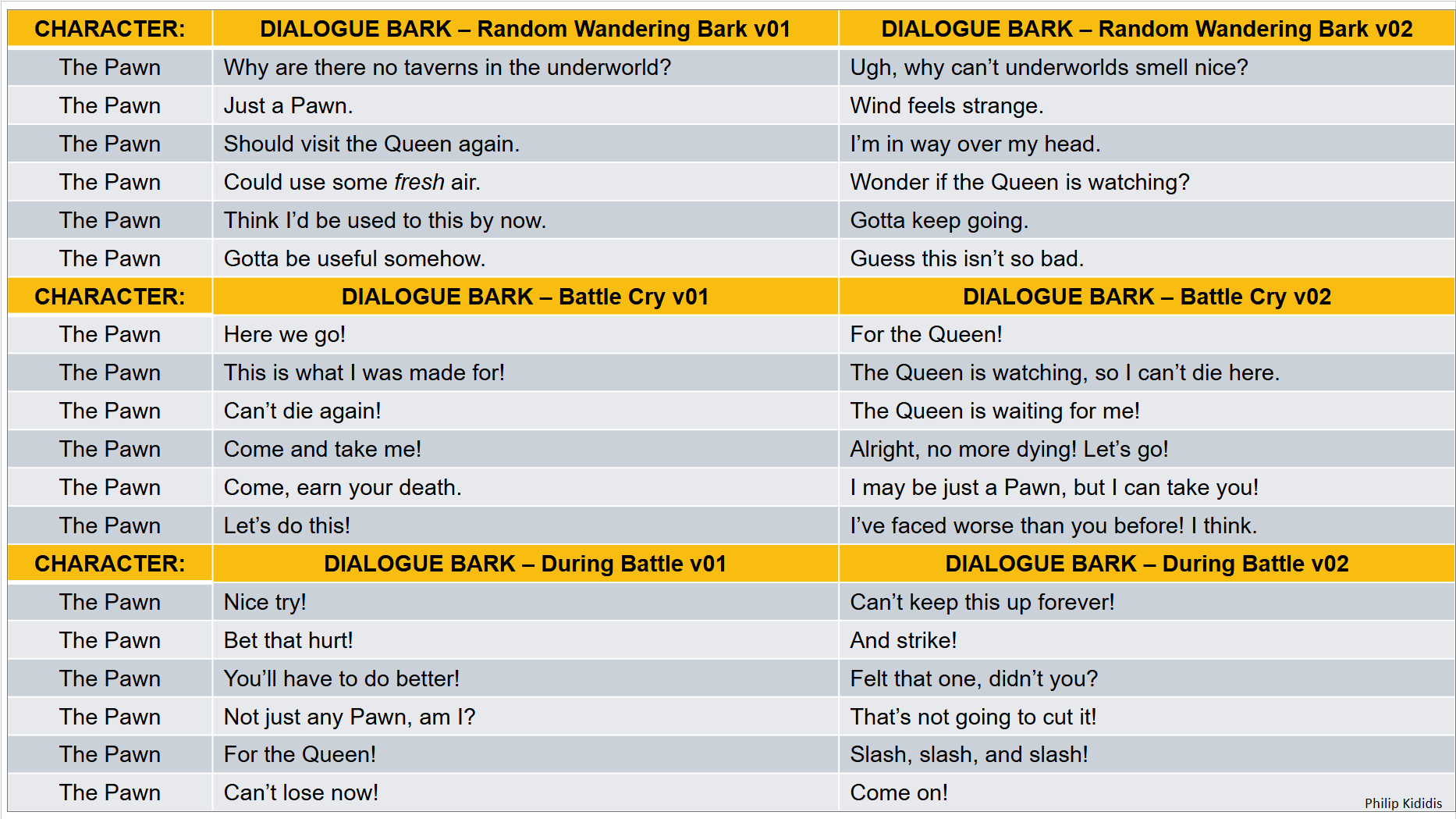
Originally designed to be a blank slate for the player, the Pawn developed a more distinct personality throughout the project. He ended up being the sort of “Everyman” hero who, at times, feels he’s in way over his head, yet always manages to rise to the occasion to overcome any obstacle in his path.
Queen Caïssa
Ally NPC
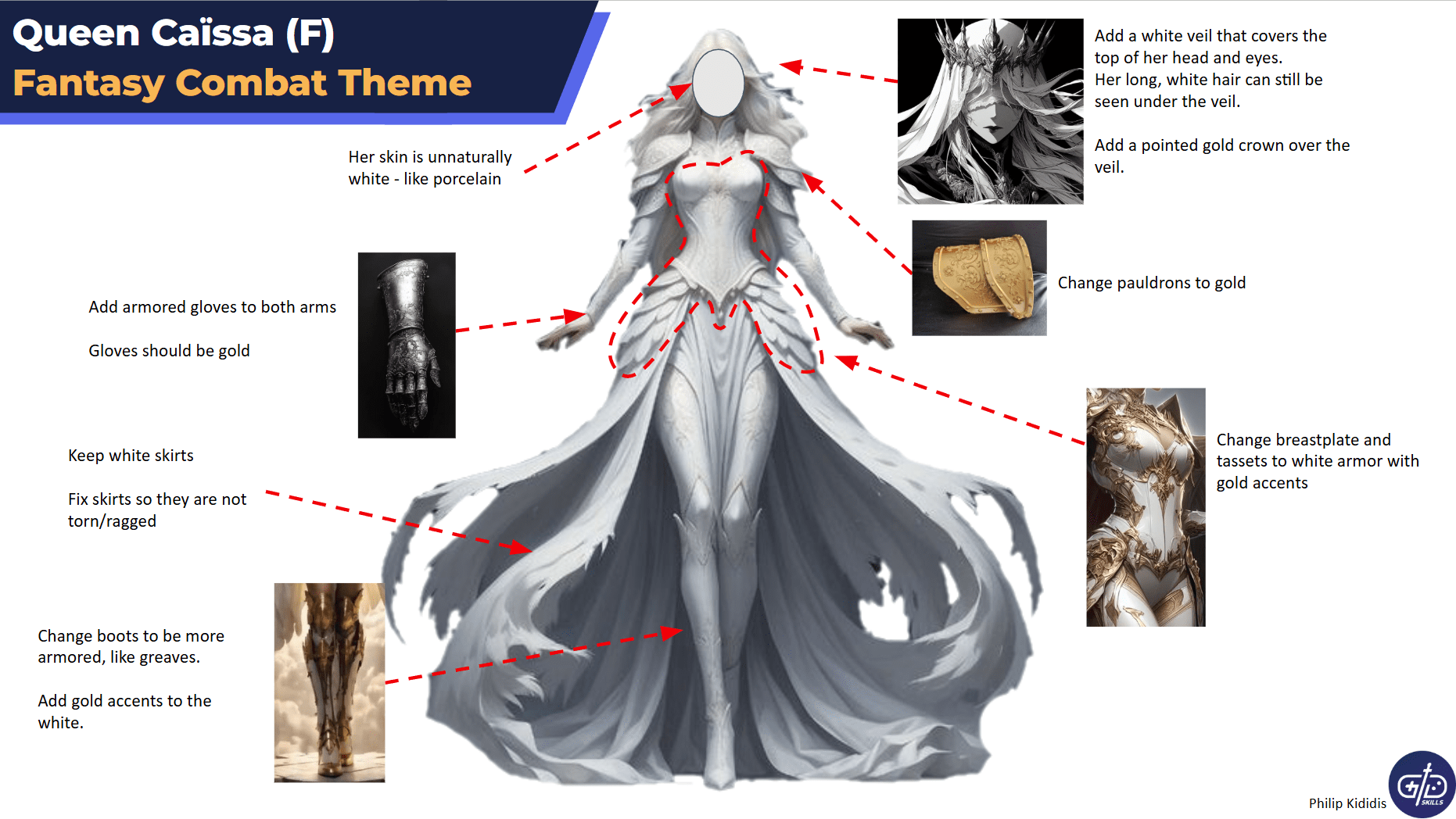
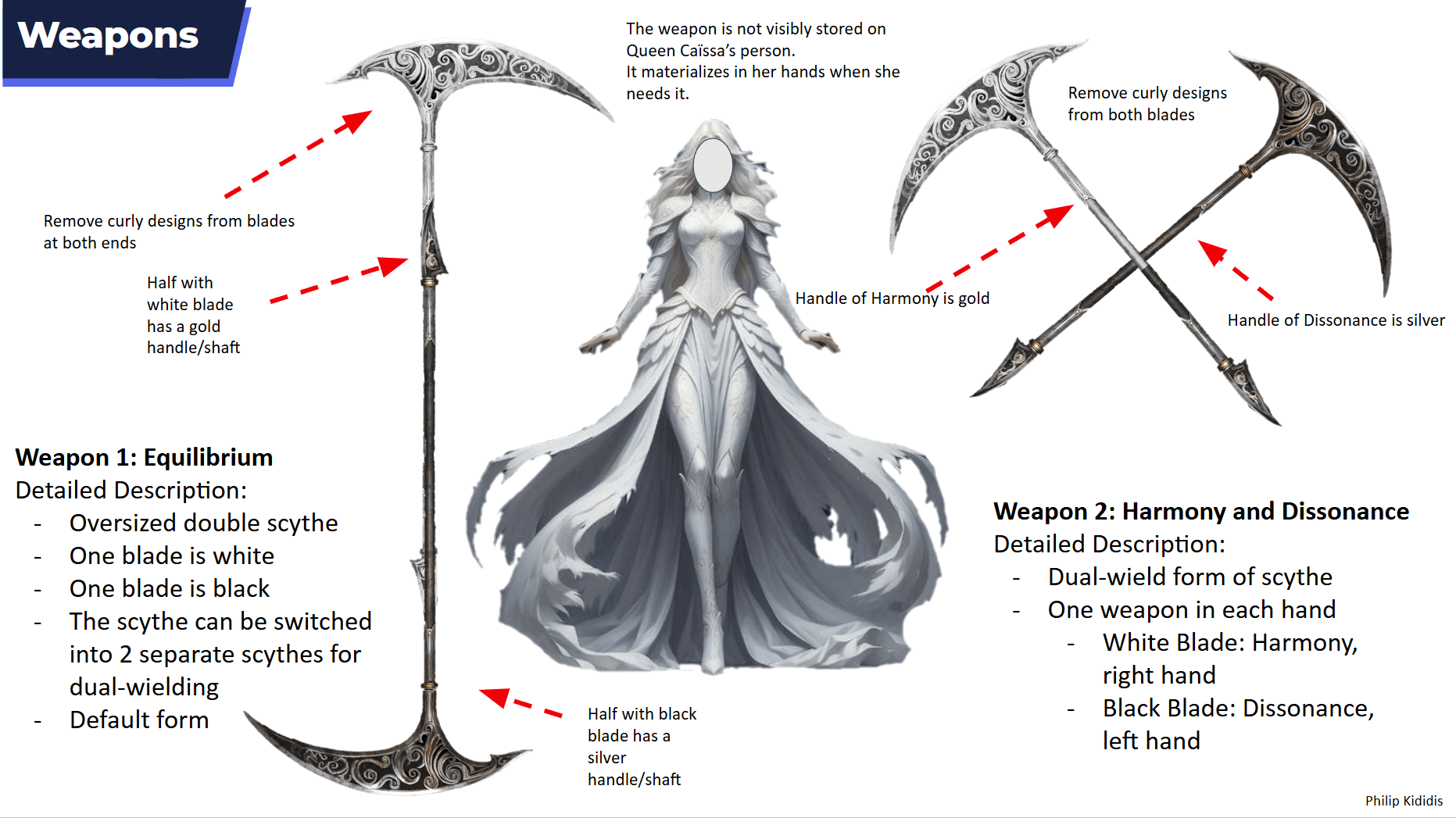
Queen Caïssa is the embodiment of Divine Order that holds the entire cosmos together. In a universe with multiple pantheons and gods spread across several different cultures, she is the overarching force that ensures each god fulfills their duties without encroaching upon another god’s domain. For example, if Hades and Anubis are quarreling over who should obtain a certain mortal’s soul, Caïssa is the authority to which they would defer.
As a deity of Order, Caïssa is very structured and strategic; she sees the battle for Cosmic Balance as an unending game of chess that she plays against her adversaries.
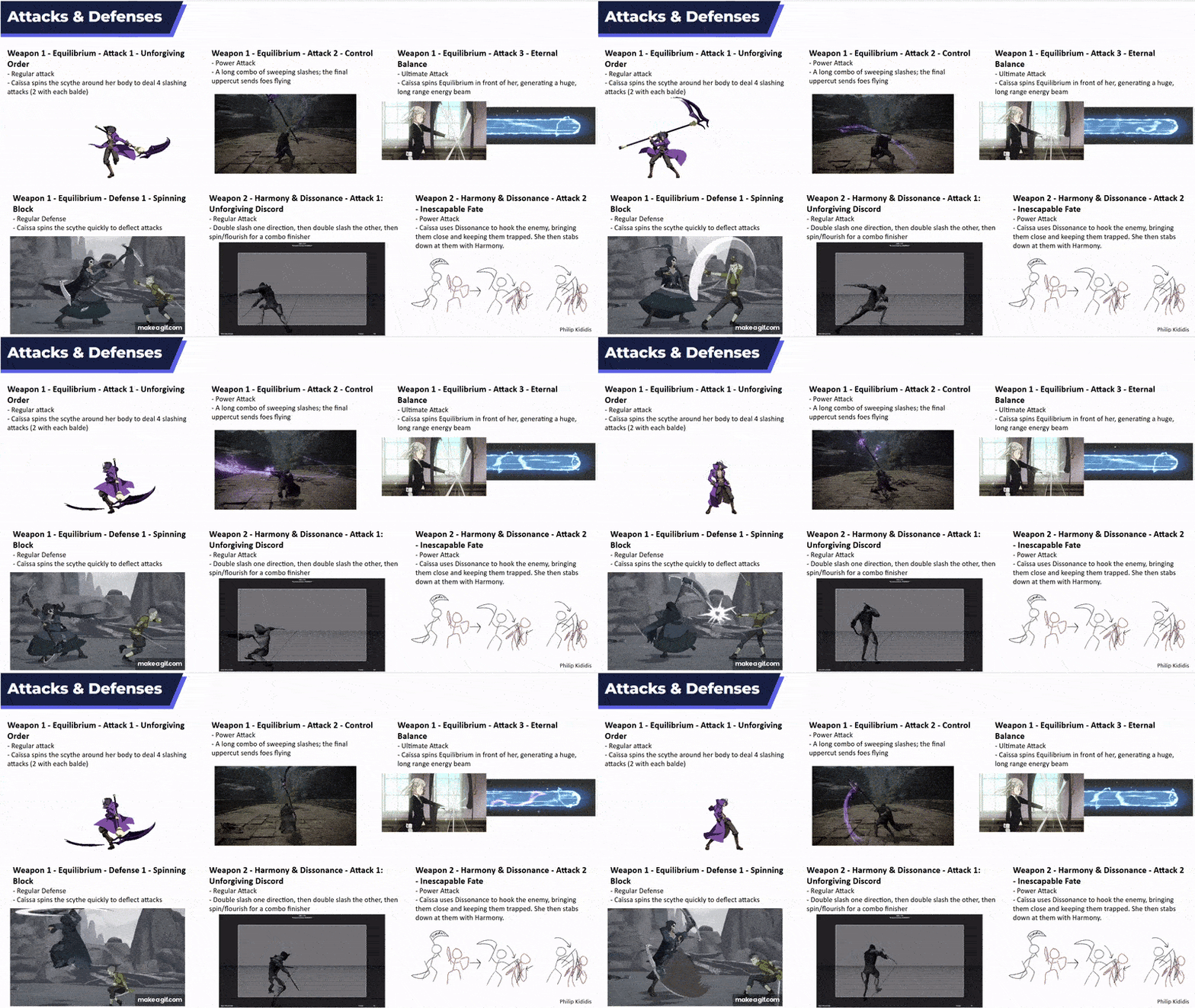
In terms of gameplay, Caïssa functions as a quest giver, but her primary purpose is to help the player level up.
Depending on the player’s choices throughout the game, they may have the opportunity to face Queen Caïssa as a final endgame boss.
Fun Fact: The name Caïssa (Kah-EE-sah) comes from an 18th century poem (itself based on a concept from a 16th century poem) that describes a fictional mythological dryad who becomes the “goddess of chess”.
Anubis
Enemy NPC (Region Boss)
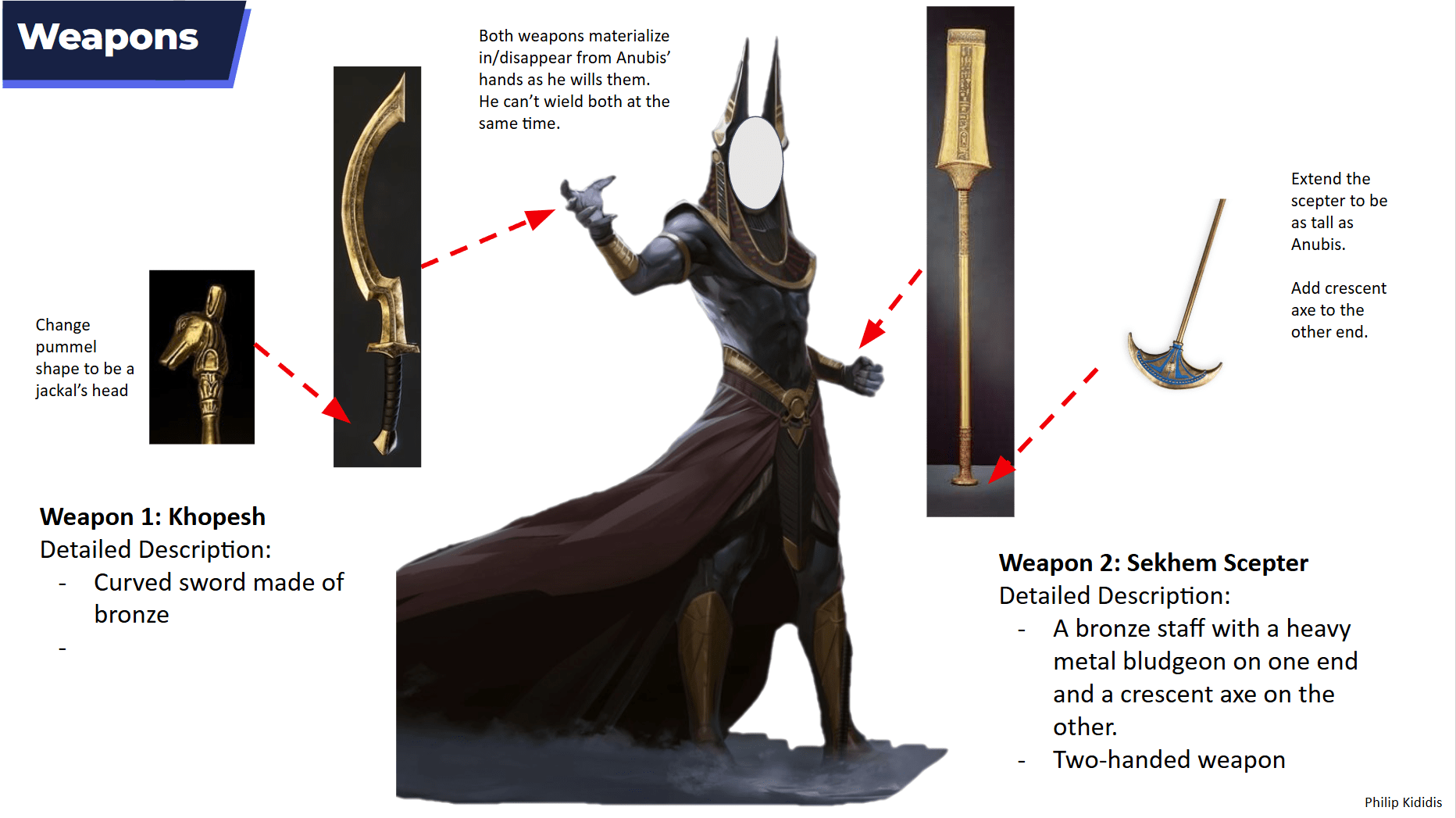
Of course, the core idea behind the game is that the player gets to fight against different gods of death. To that end, I would be remiss to leave out ancient Egypt’s most famous death god, Anubis.
Anubis is arguably one of the most recognizable figures in all of Egyptian mythology, which makes him a fitting boss for the Duat region.
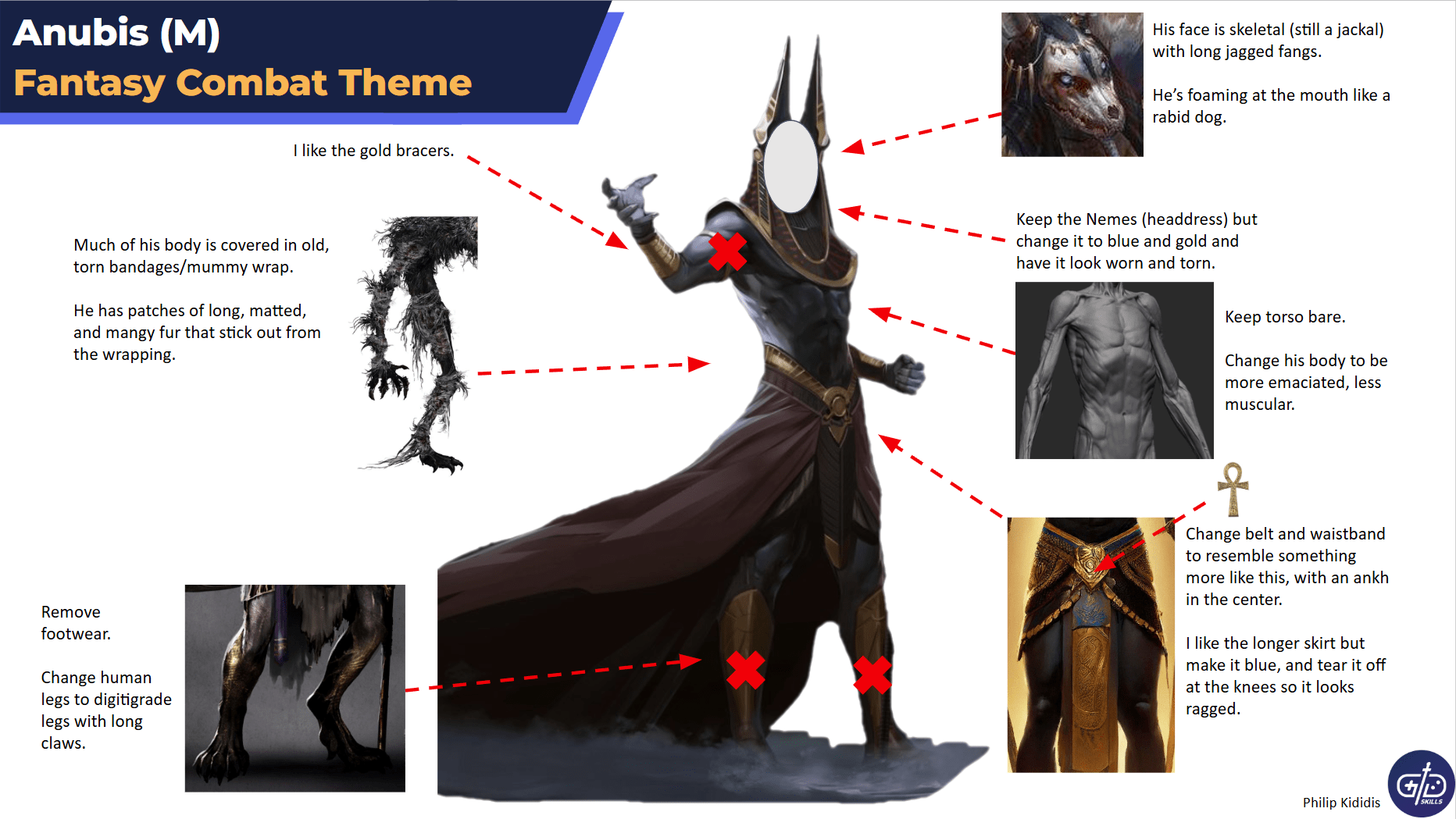
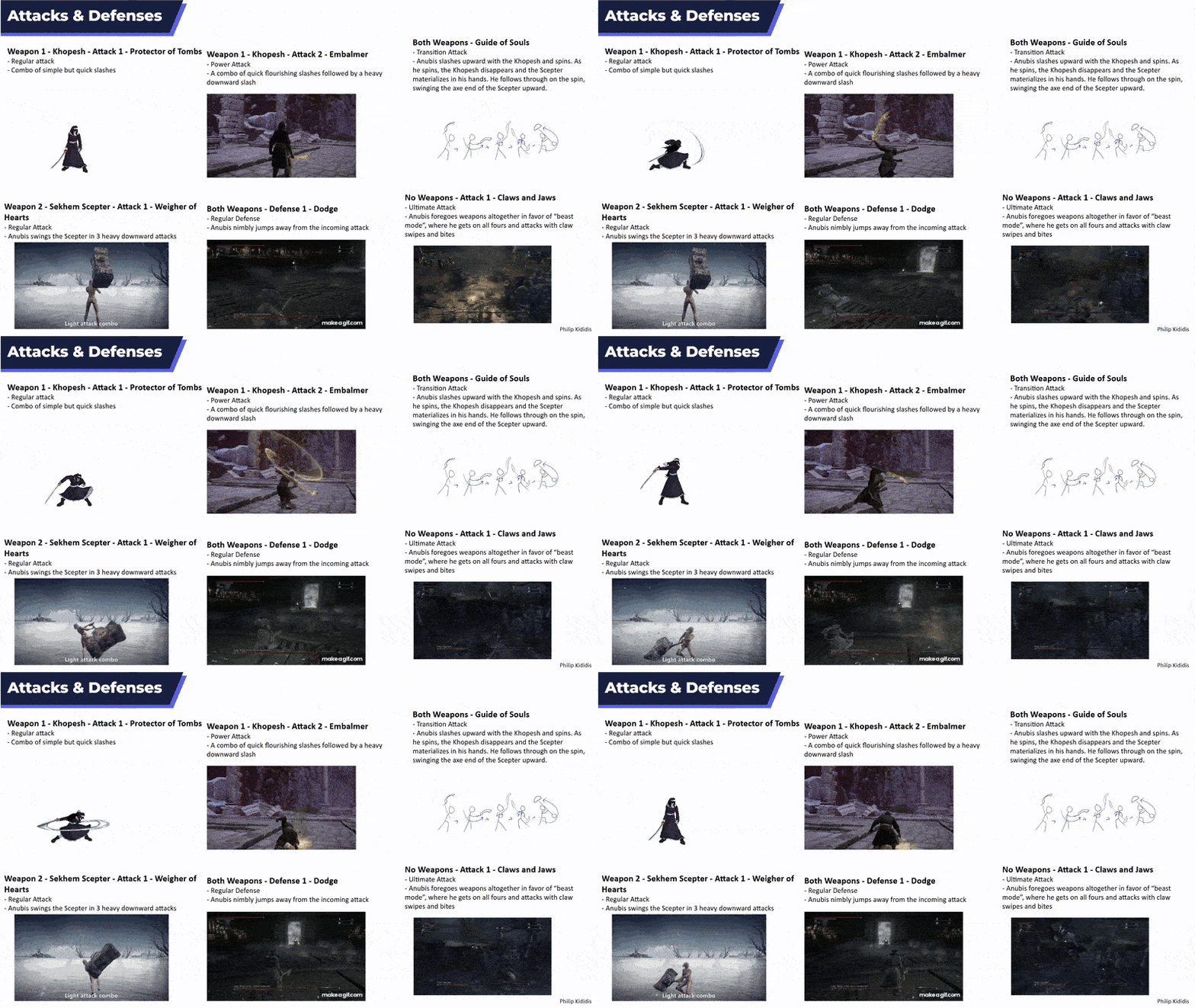
I imagine Anubis to present himself respectably, going about his duties with an air of quiet authority that both calms and intimidates the souls he judges. However, he is nothing like this while under Chaos’ curse. In my design for the corrupted version of Anubis, he is aggressive and beast-like – more akin to a jackal than a human.
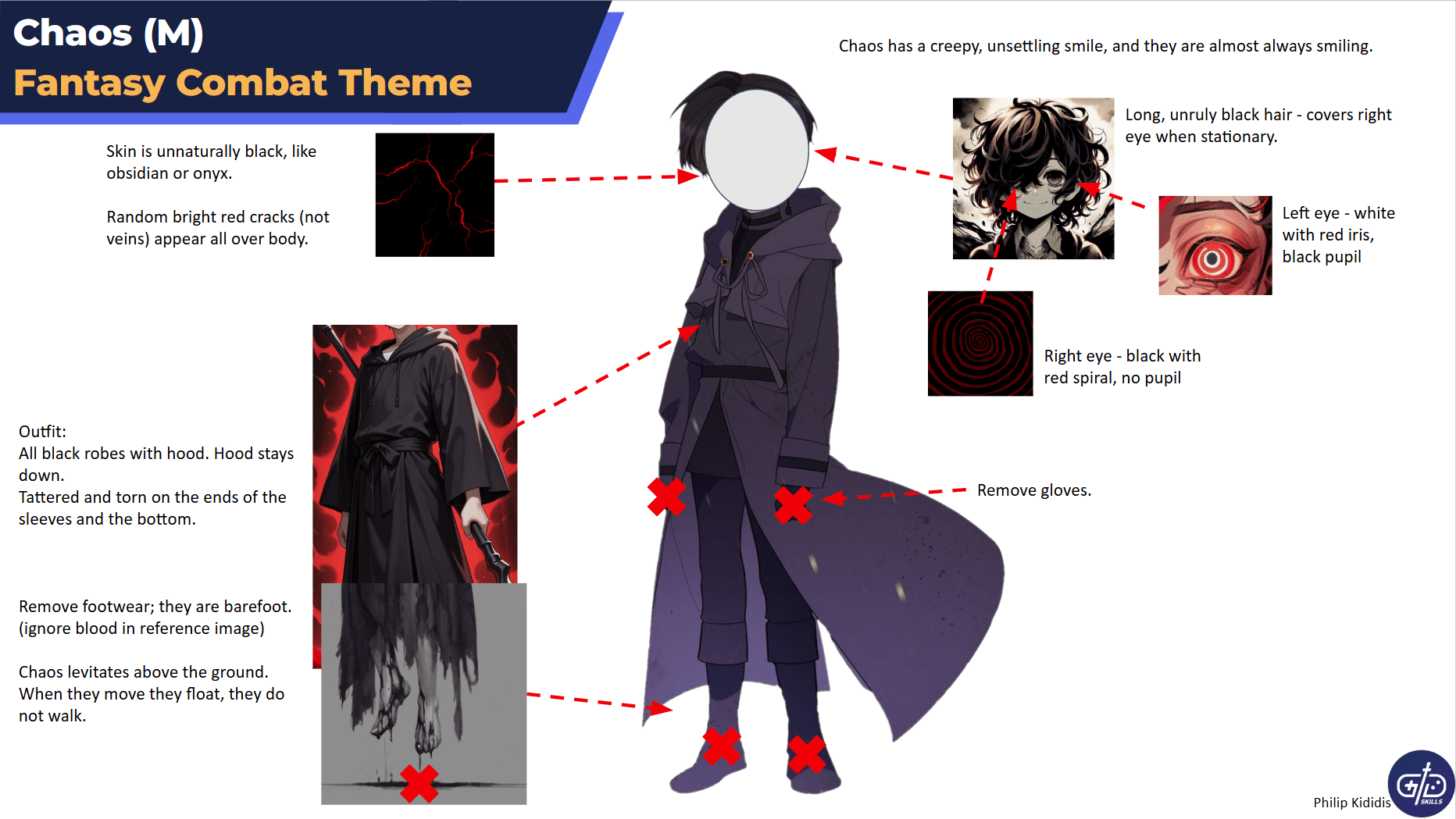
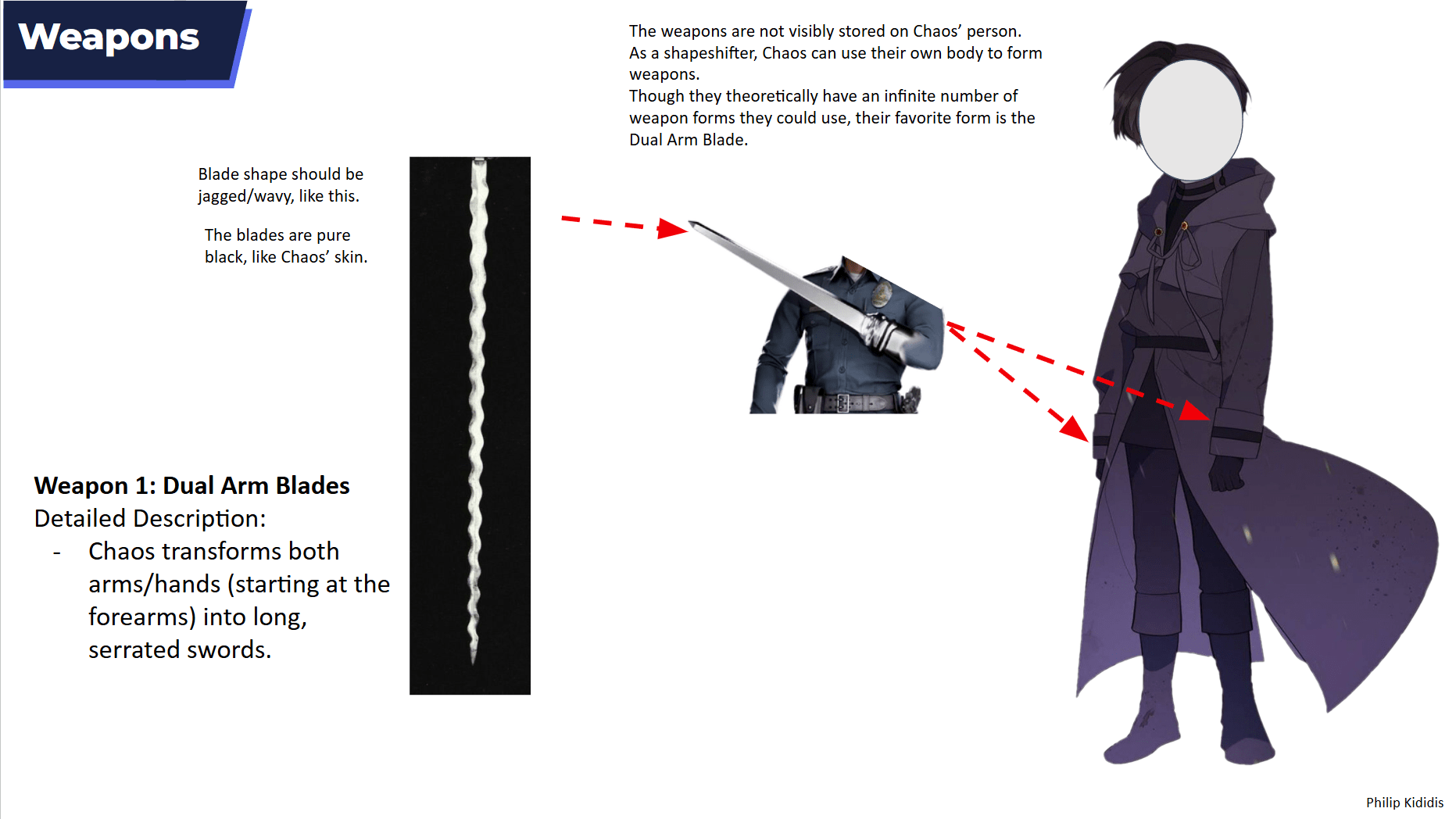
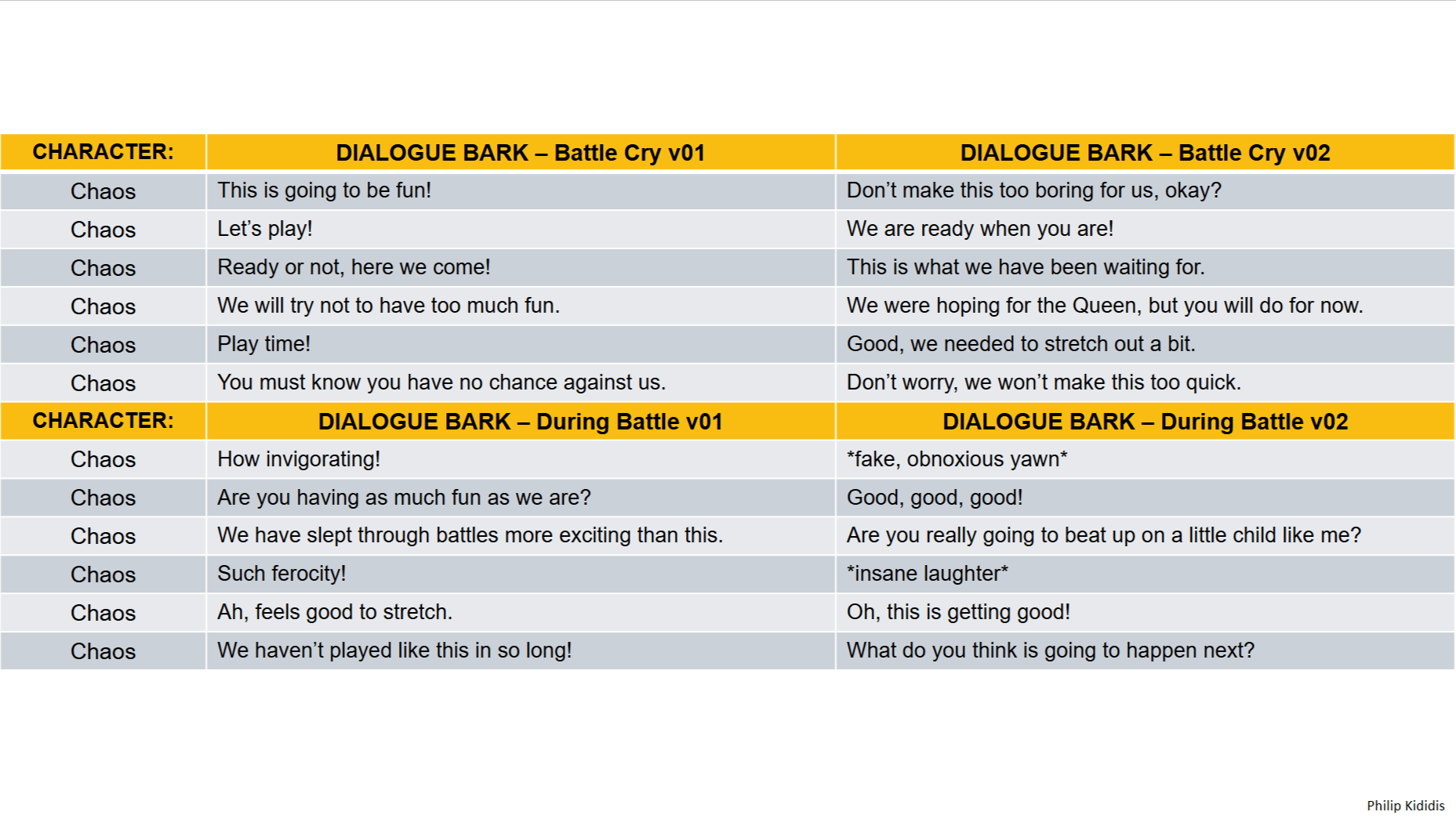
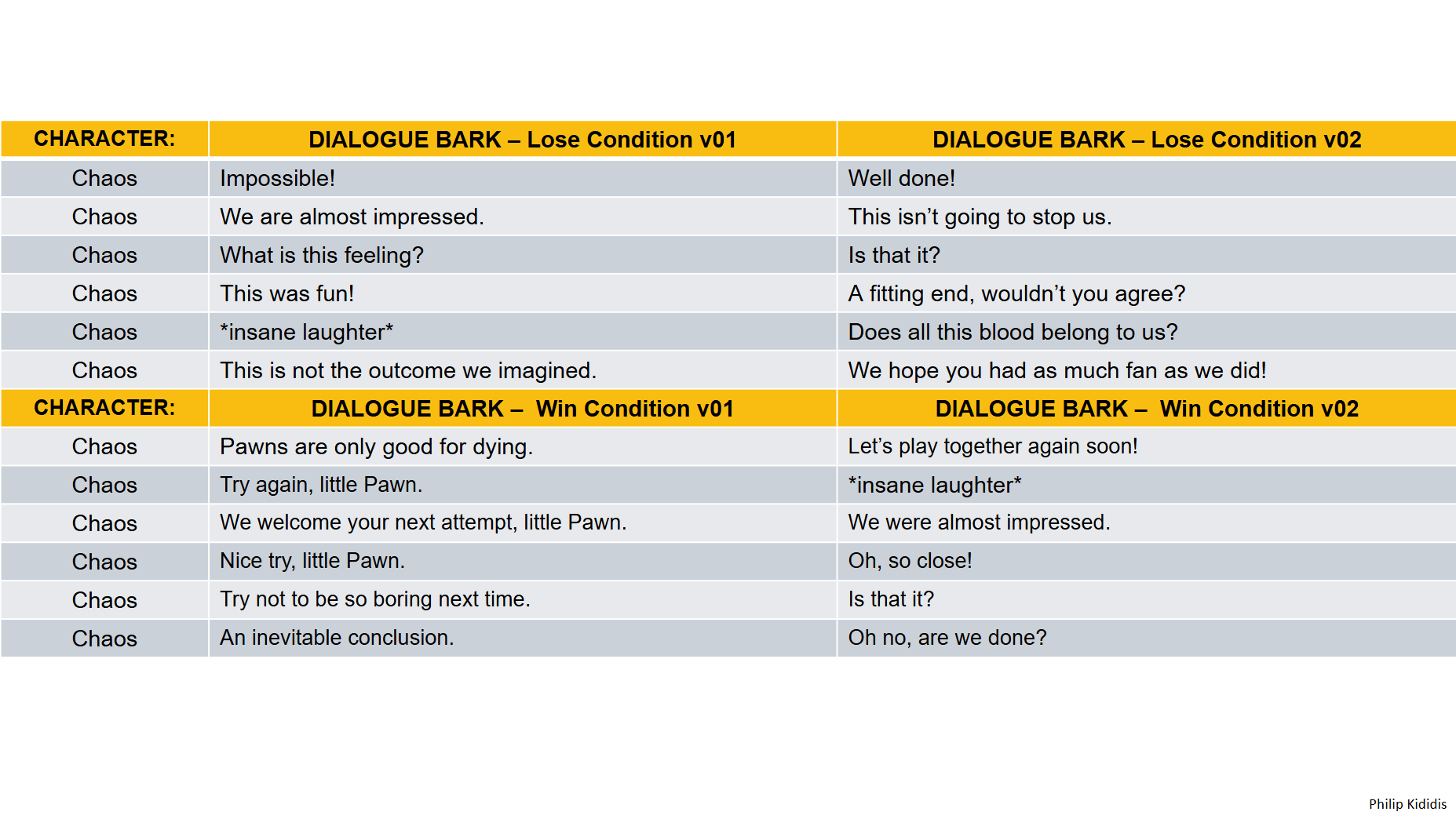
Chaos
Enemy NPC (Final Boss)
In Mortal Gods, a boss battle against a god of death is relatively standard. So how do you come up with a final boss who is not only “bigger and badder” than actual gods, but also doesn’t belong to one particular culture?
My answer came in the form of Chaos, the antithesis of Queen Caïssa’s Divine Order and her opponent in the eternal chess game that plays out in the universe. Problem is, Chaos isn’t one for rules, and chess bores them to tears. Unpredictability and unrestraint are Chaos’ core traits.
In their latest ploy to plunge the cosmos into disarray, Chaos has cursed the gods of the dead, corrupting them and causing them to spread fear and violence among their respective realms. This is the inciting incident behind the story of Mortal Gods.
Worldbuilding
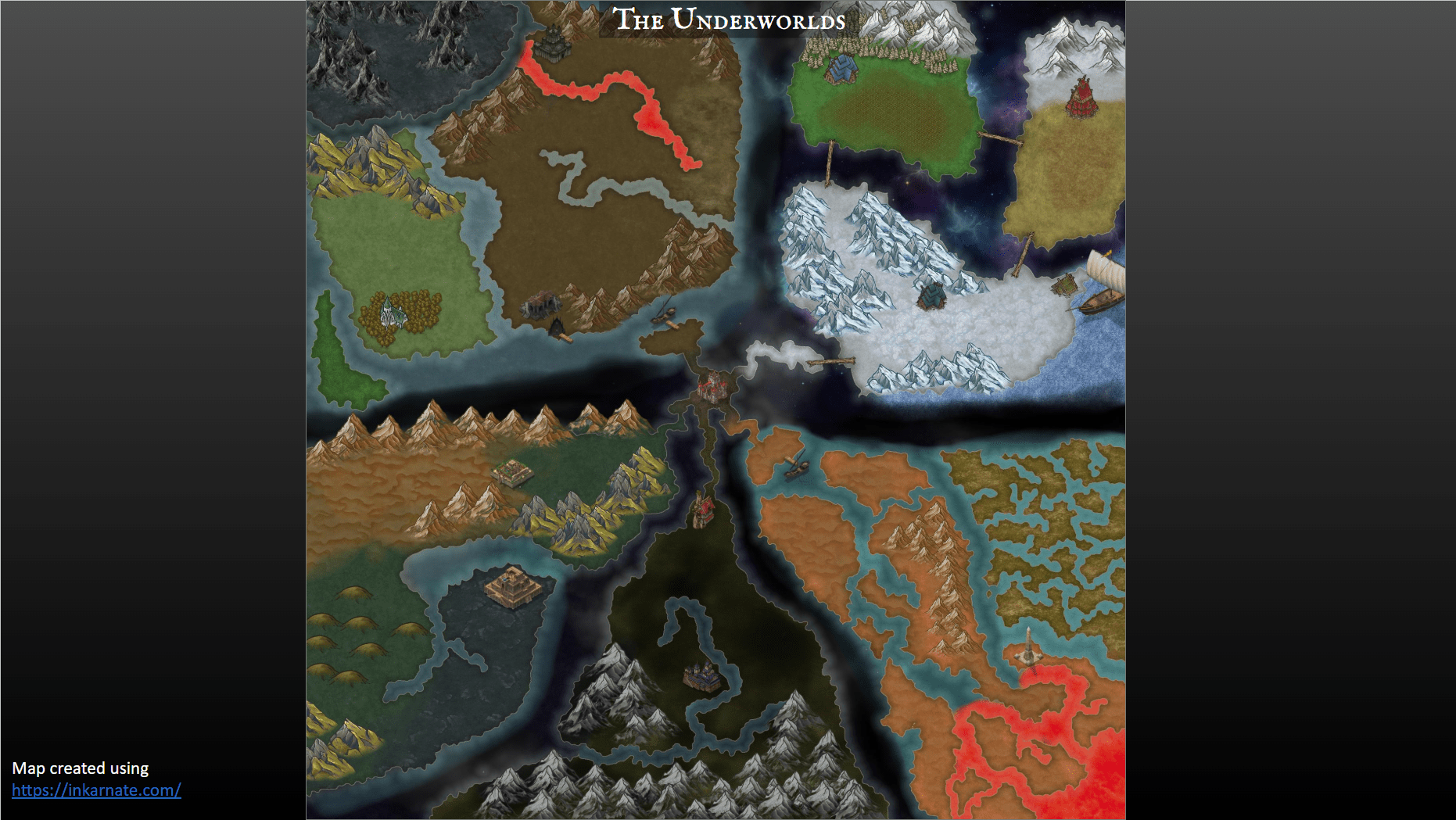
World Map
About Region A: The Fulcrum
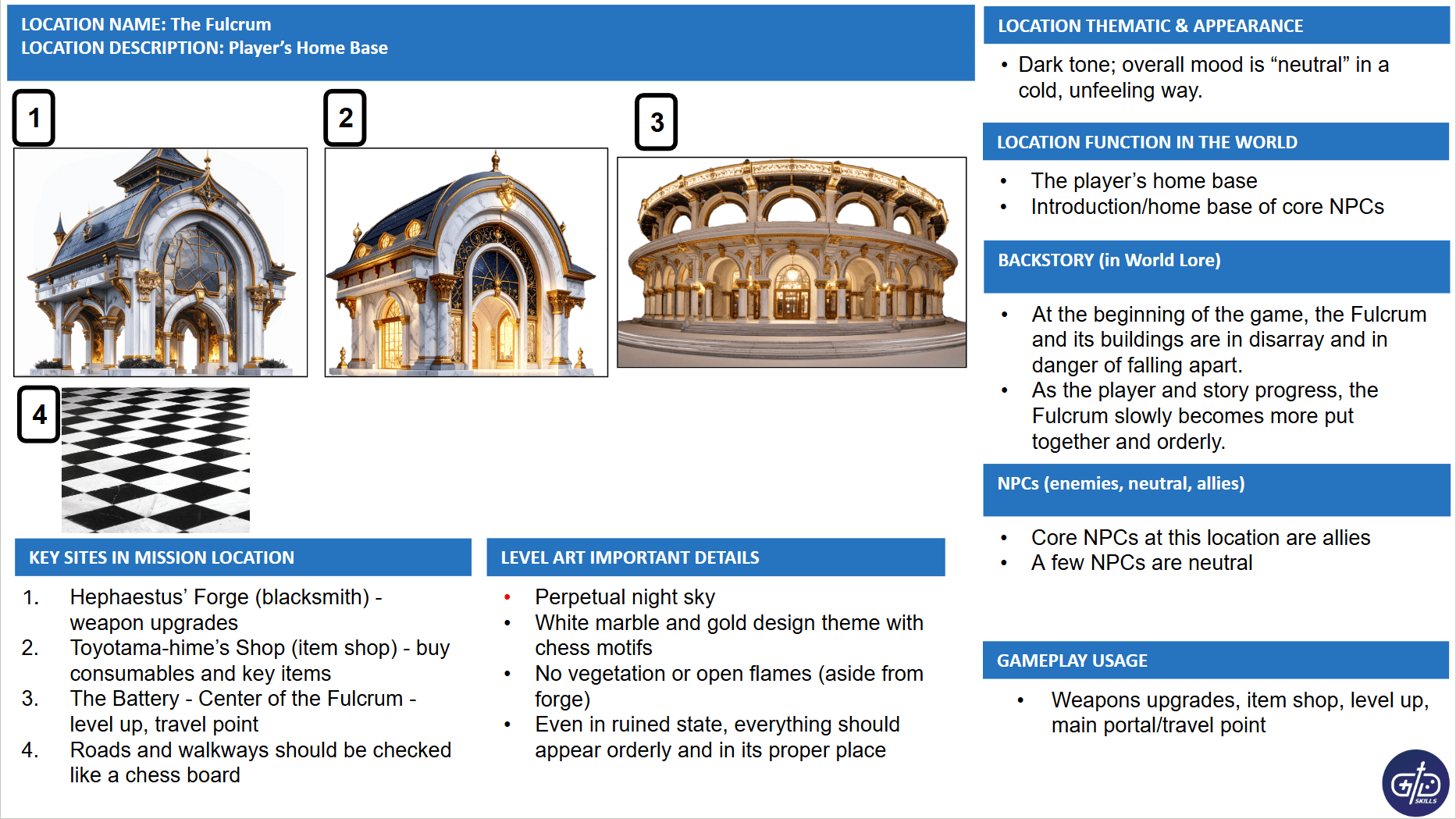
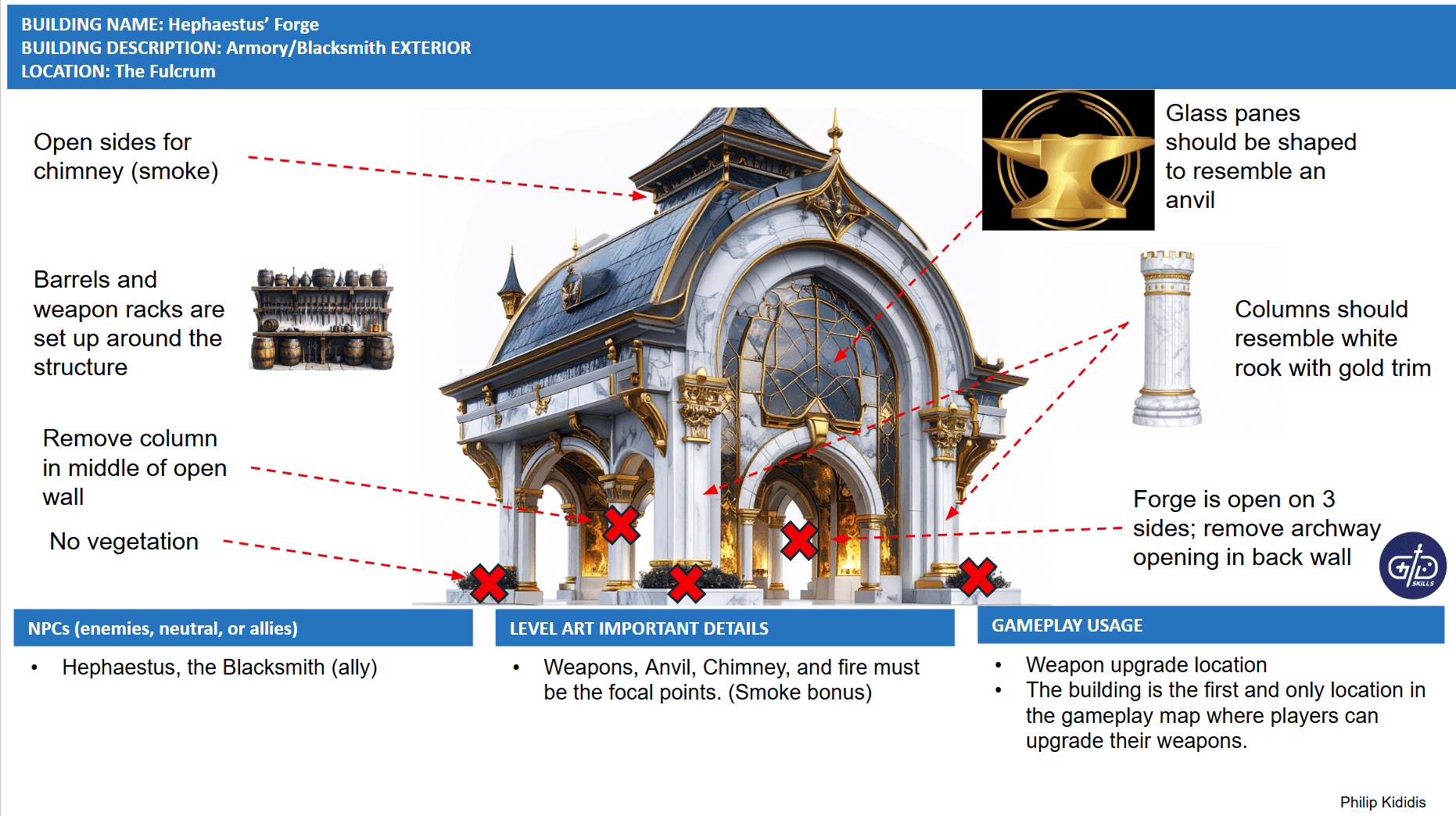
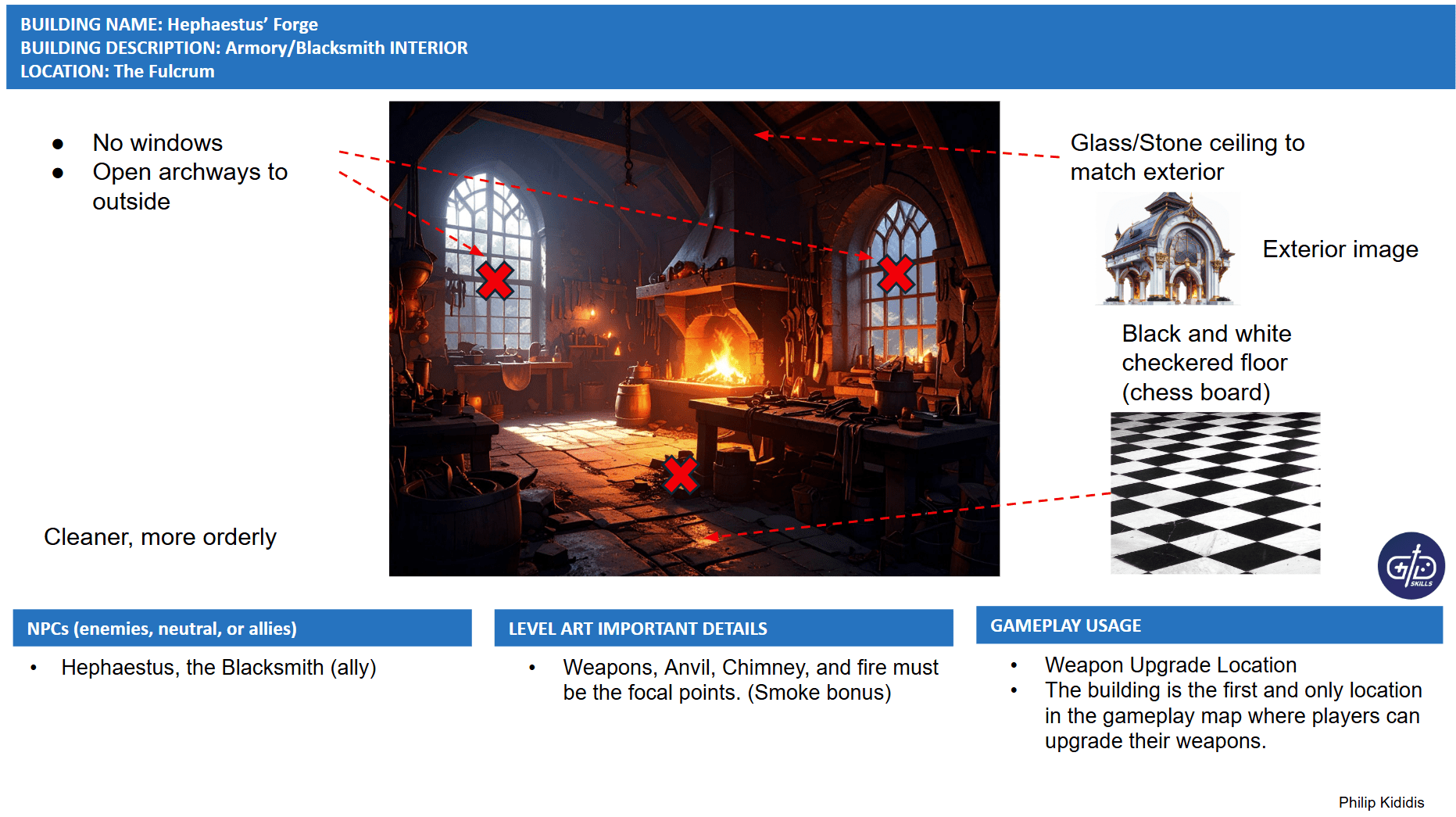
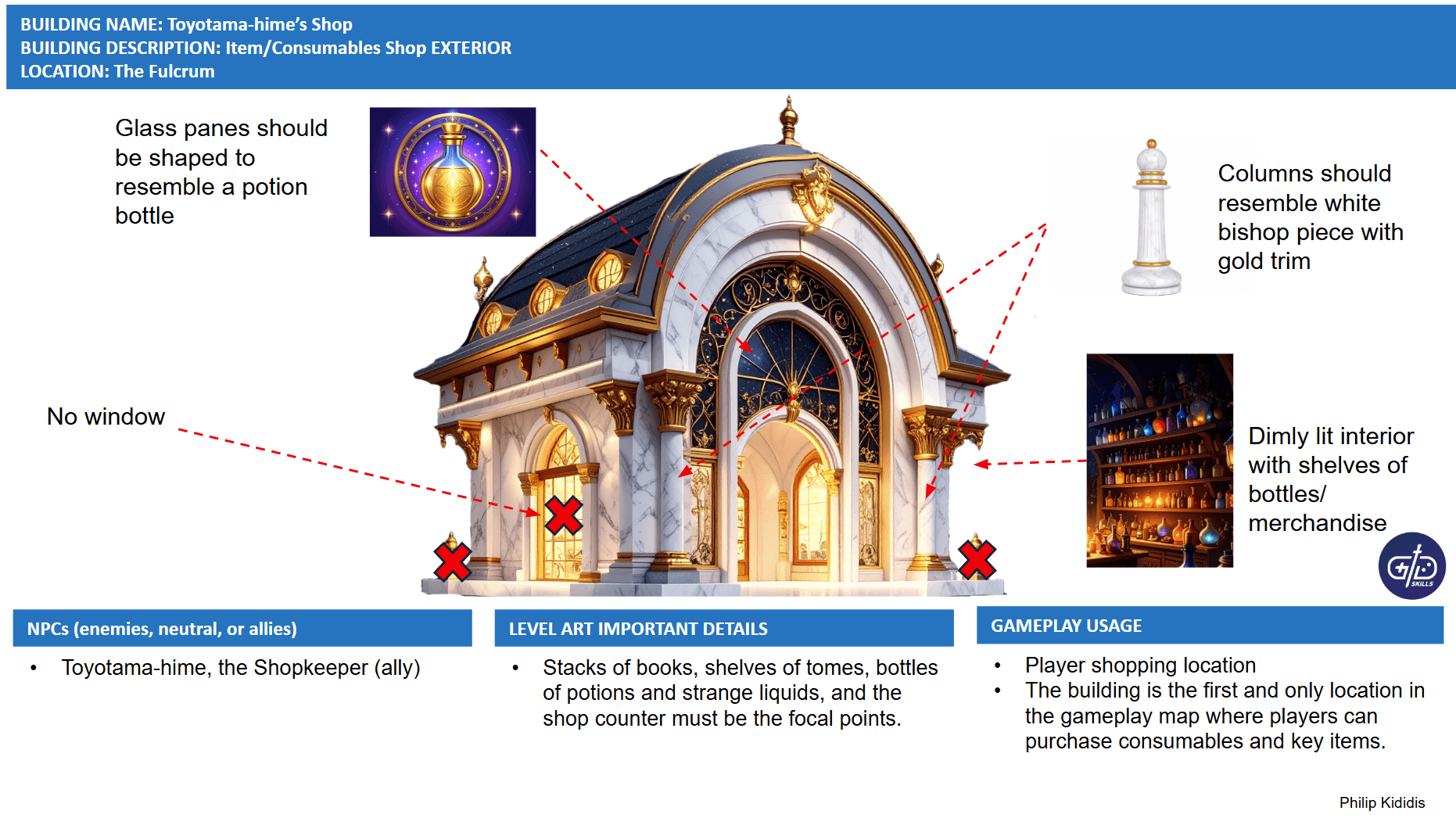
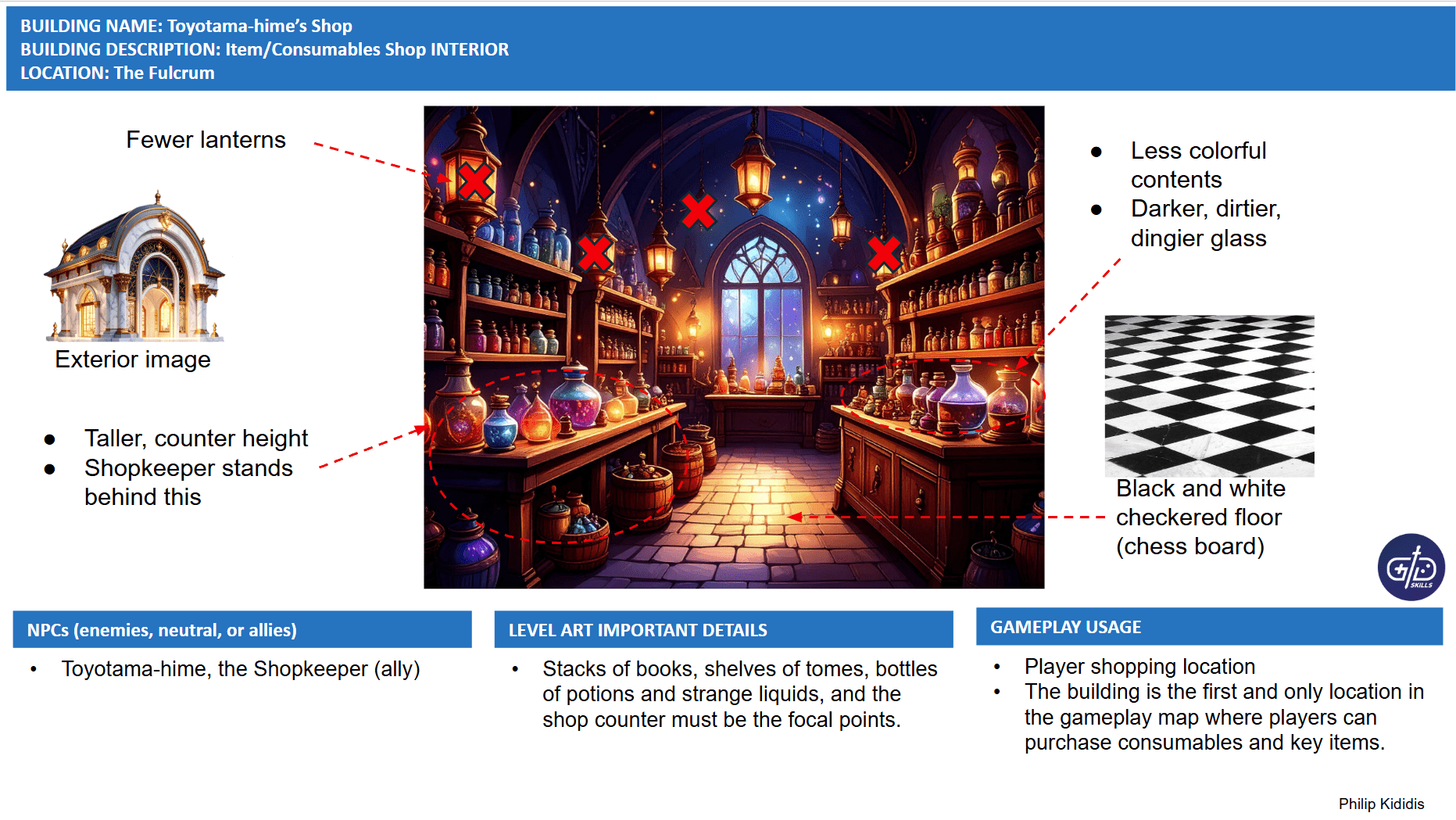
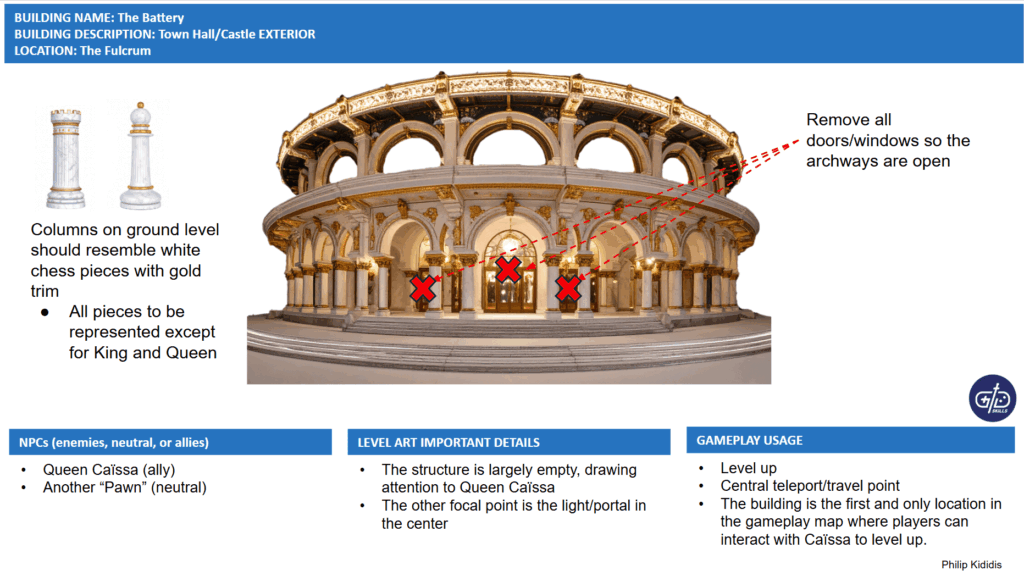
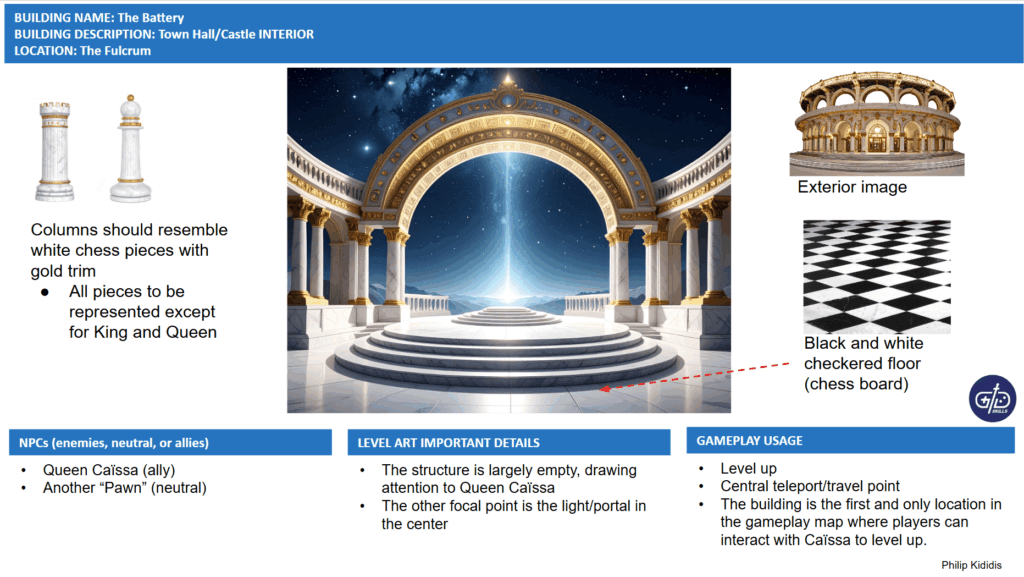
The Fulcrum is an original location that I created to serve as the Player Character’s home base. It is the headquarters of Divine Order, where Queen Caïssa resides and orchestrates her every move to maintain cosmic Balance. As such, I incorporated a chess theme into the design of the Fulcrum and its key buildings.
The Fulcrum offers important gameplay services, such as weapons upgrades, item shopping, and leveling up.
As gods are relatively commonplace in the universe of Mortal Gods, many deities who have chosen to back Divine Order can be encountered while exploring the Fulcrum.
Building Design
Genre and Content Research
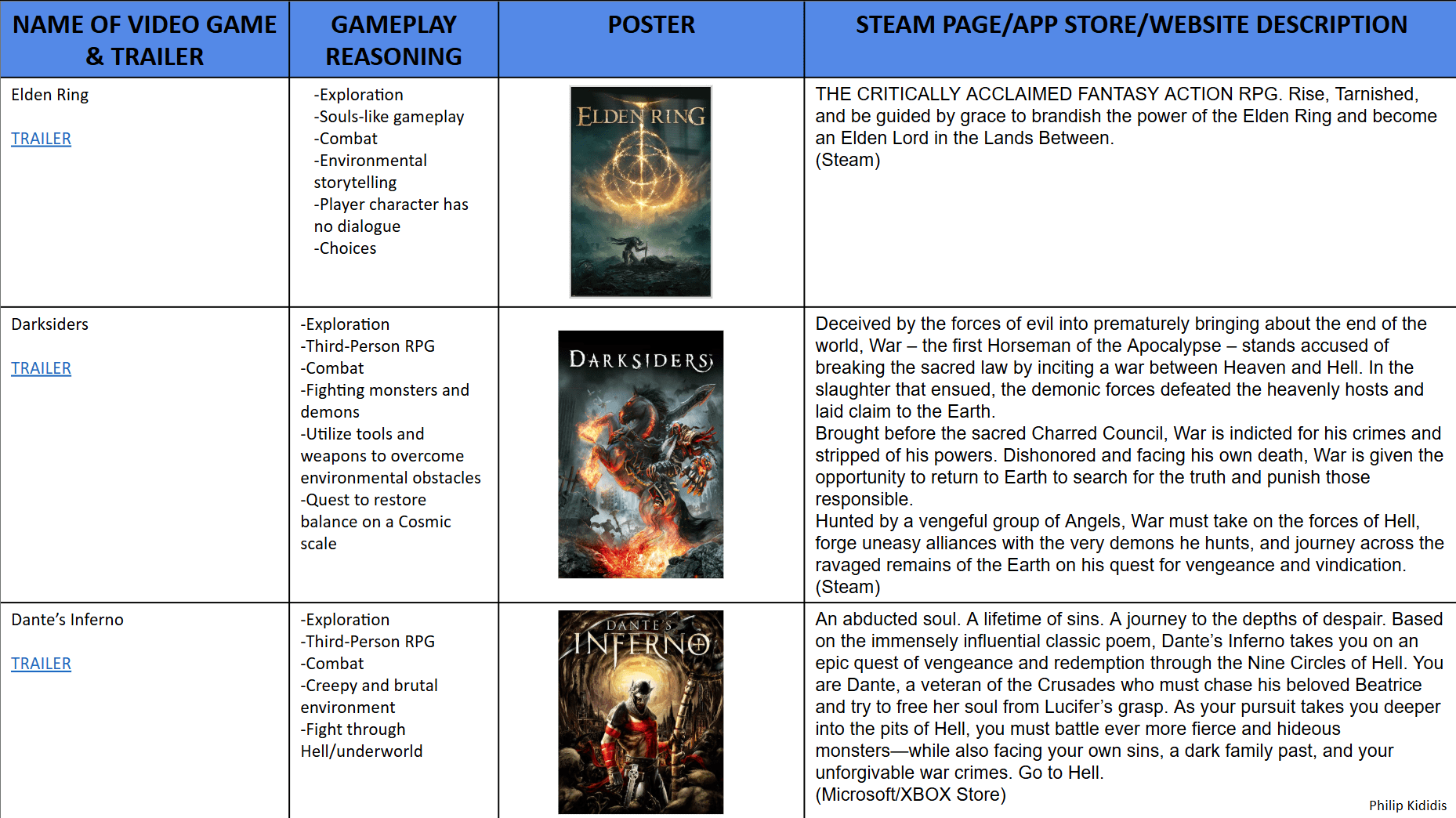
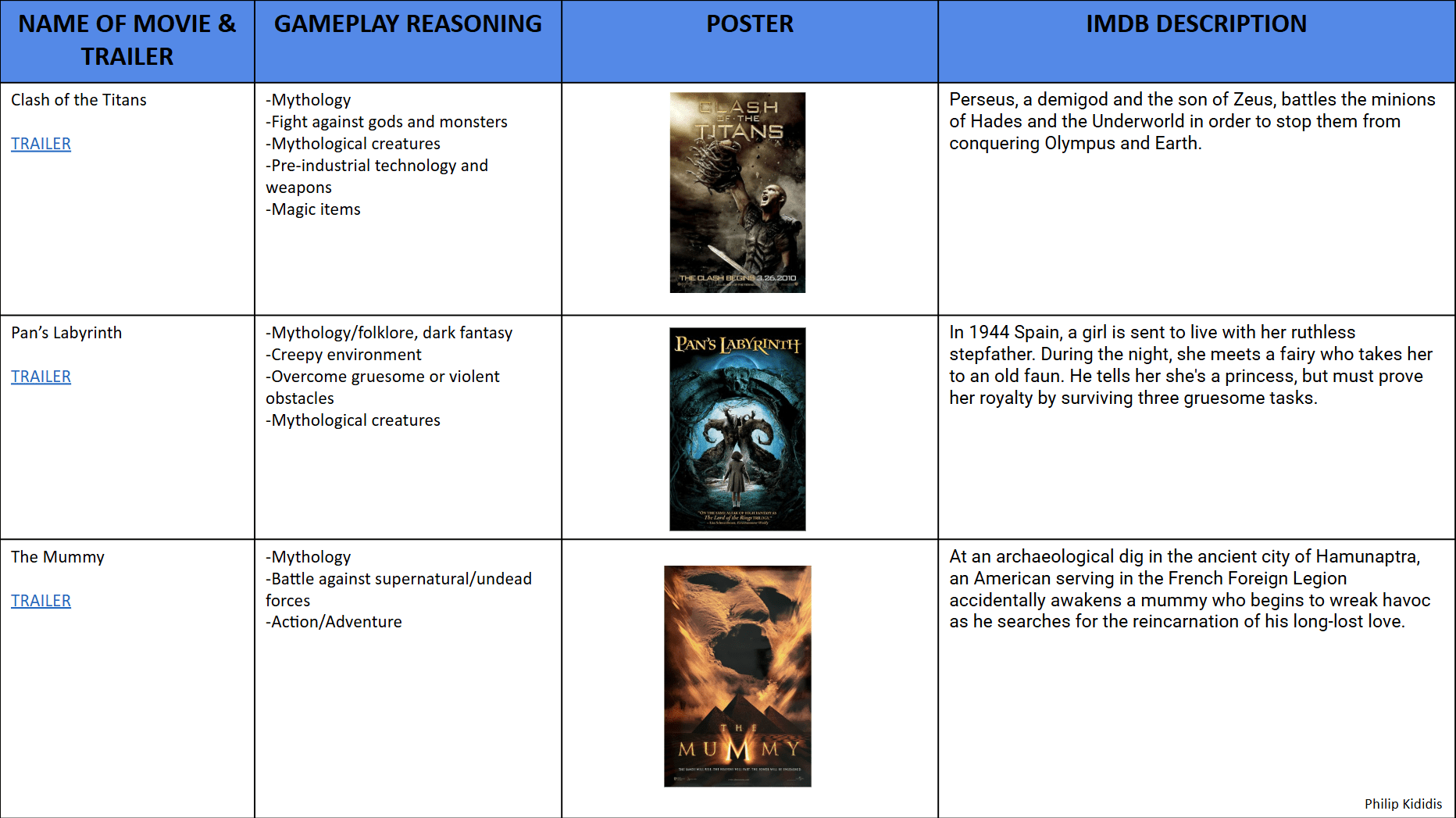
Researched popular and high-grossing media to serve as inspiration and set the tone for the game.
- Dark fantasy roleplaying video games that emphasize exploration and combat, such as Elden Ring, Darksiders, and Dante’s Inferno
- Movies about mythology, specifically where the protagonist is set against a mythological or divine figure, such as Clash of the Titans, Pan’s Labyrinth, and The Mummy
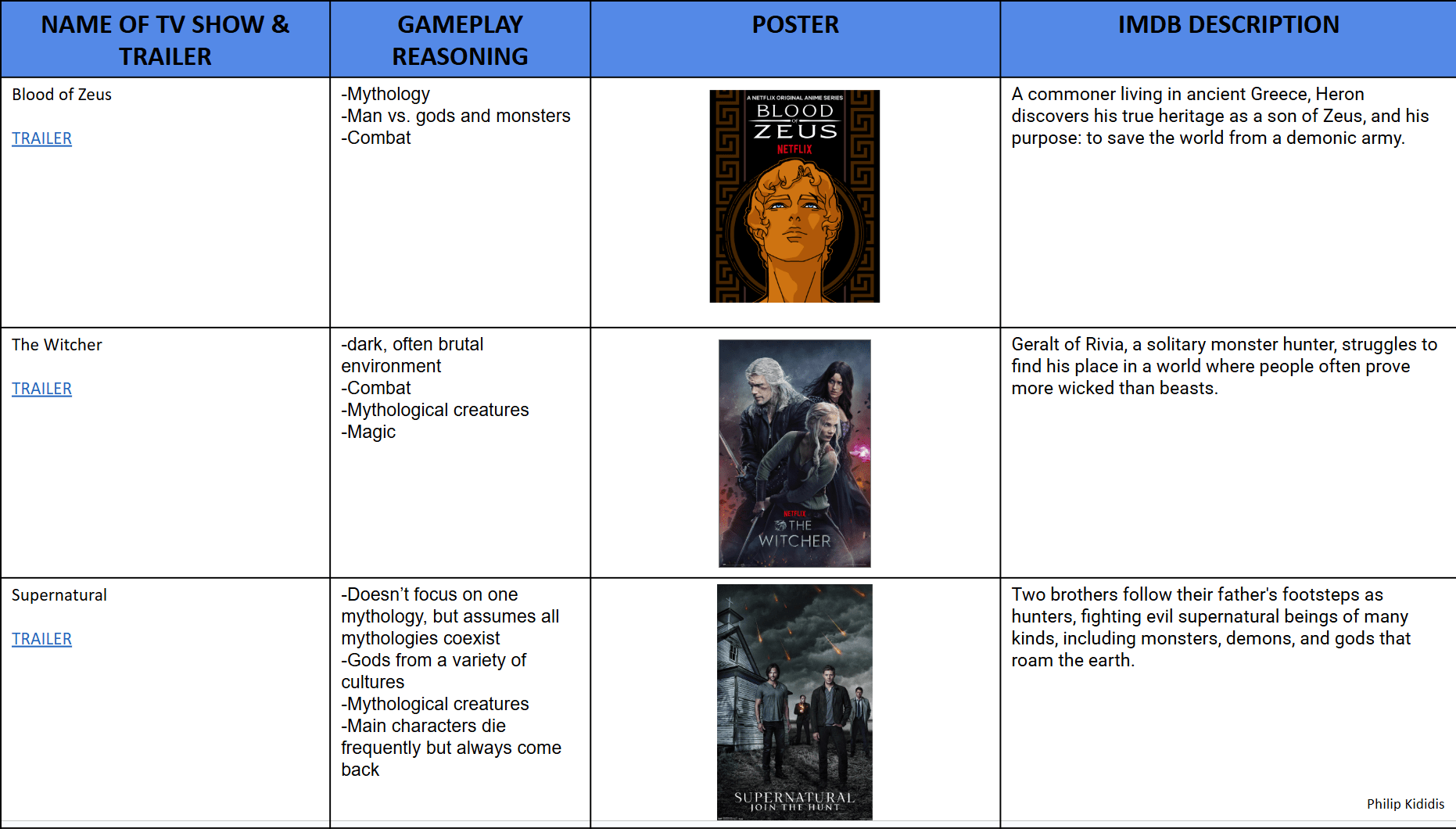
- Dark (and often brutal) fantasy TV shows that involve fighting creatures and deities from myths and legends, such as Blood of Zeus, The Witcher, and Supernatural
These references can help designers during worldbuilding and gameplay development, as well as help the marketing team determine market positioning, target audience, and competition.
Linear & Branching Dialogue
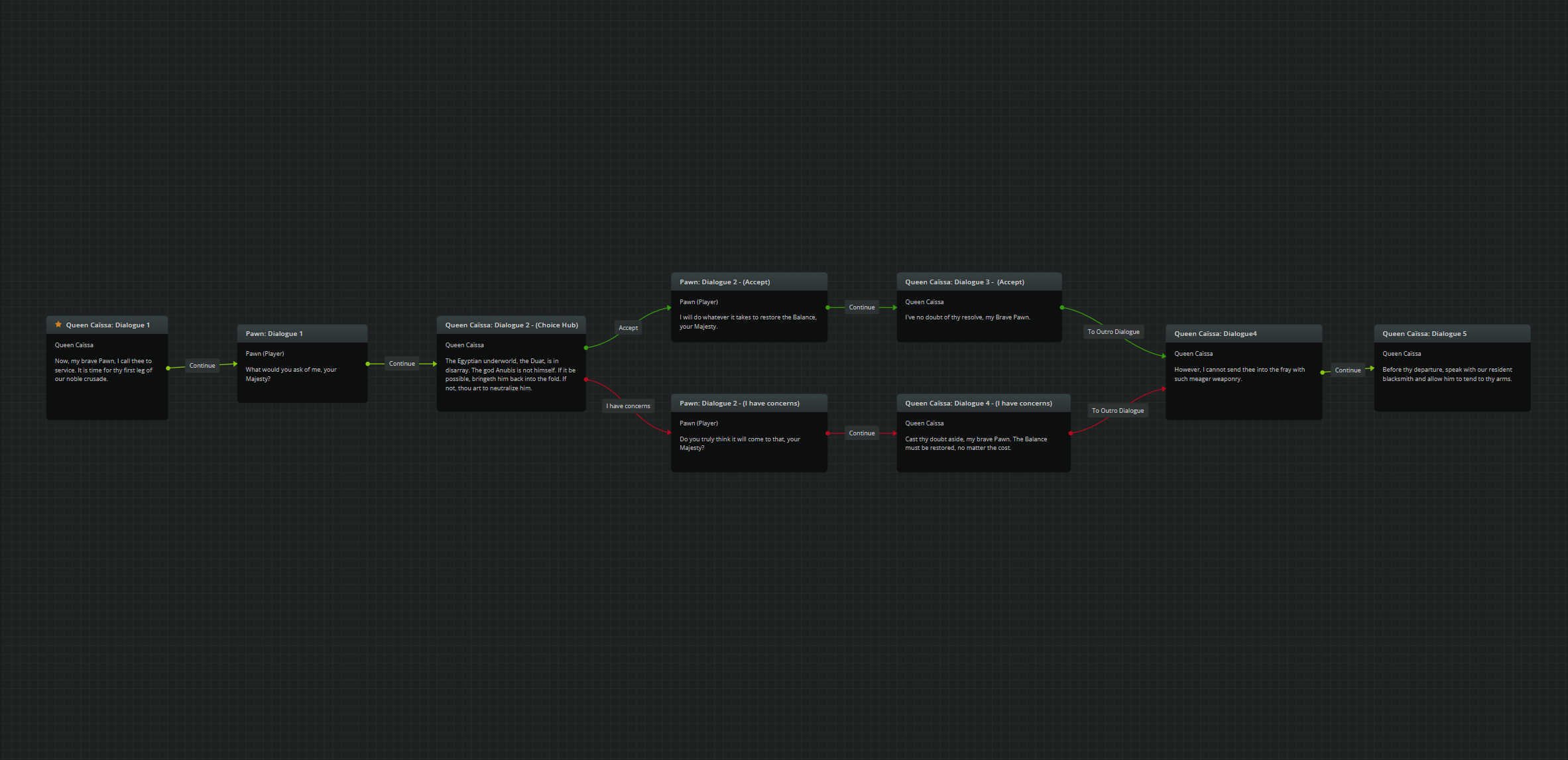
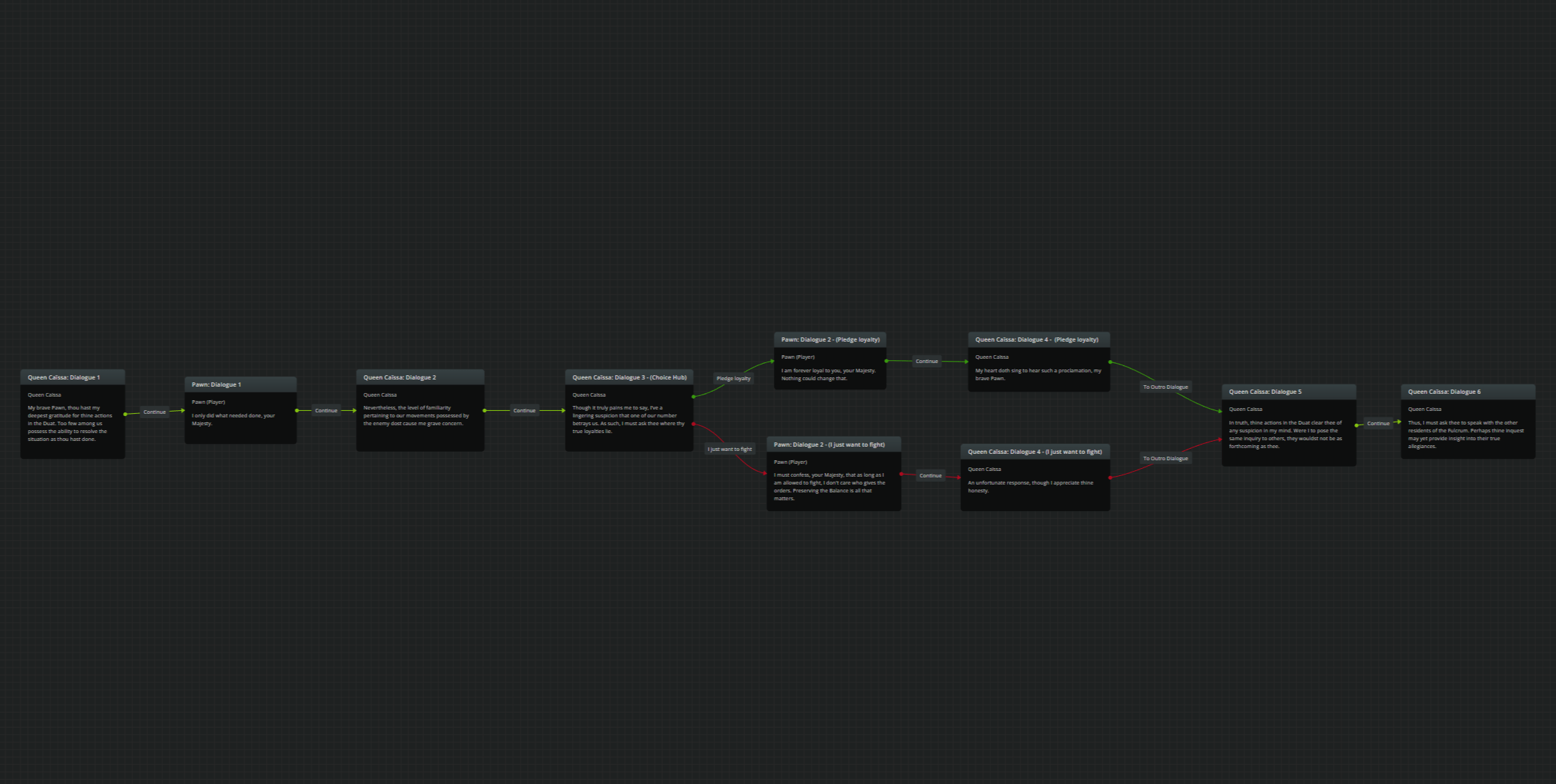
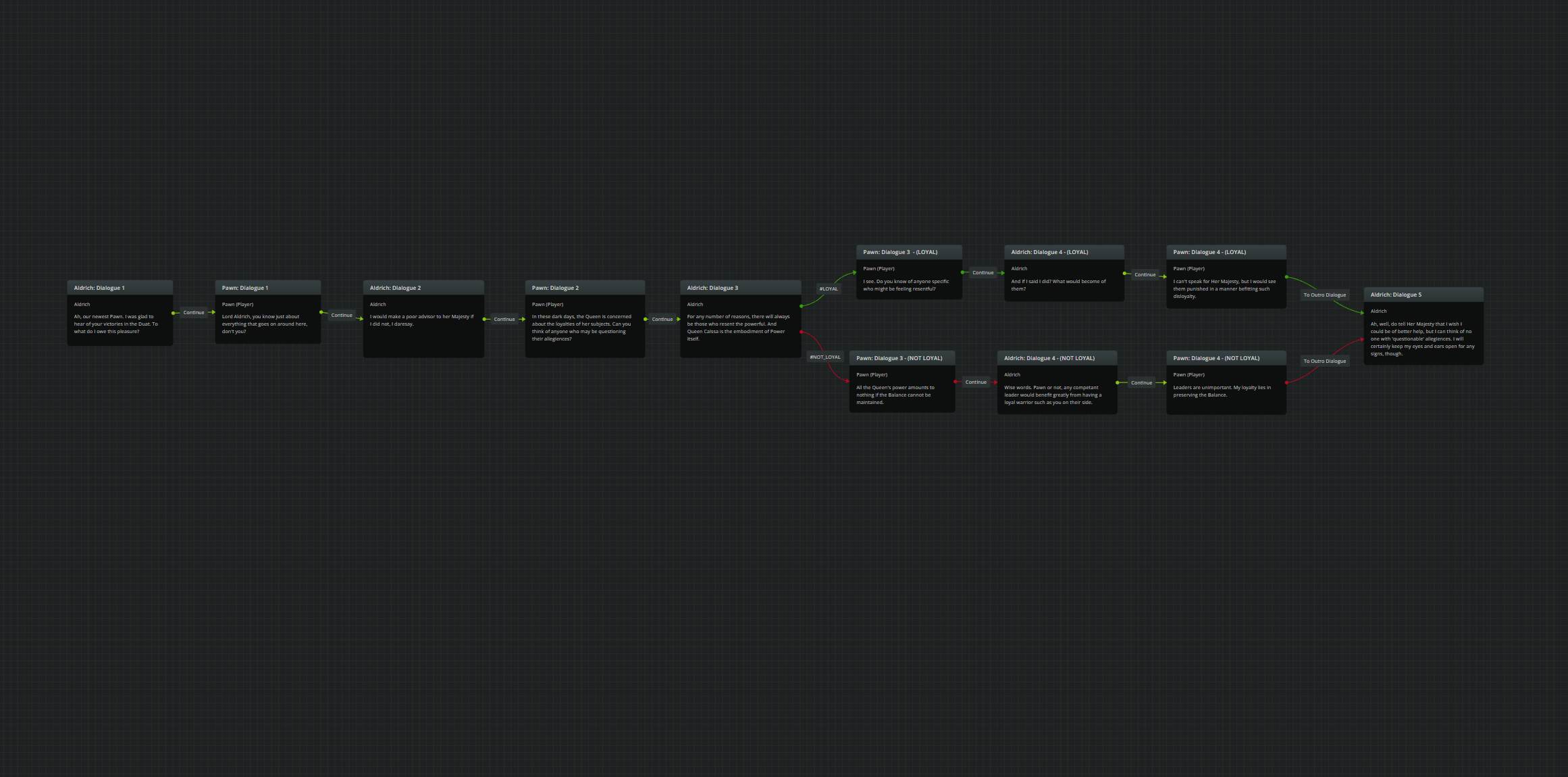
Designed Quest Branching Dialogue
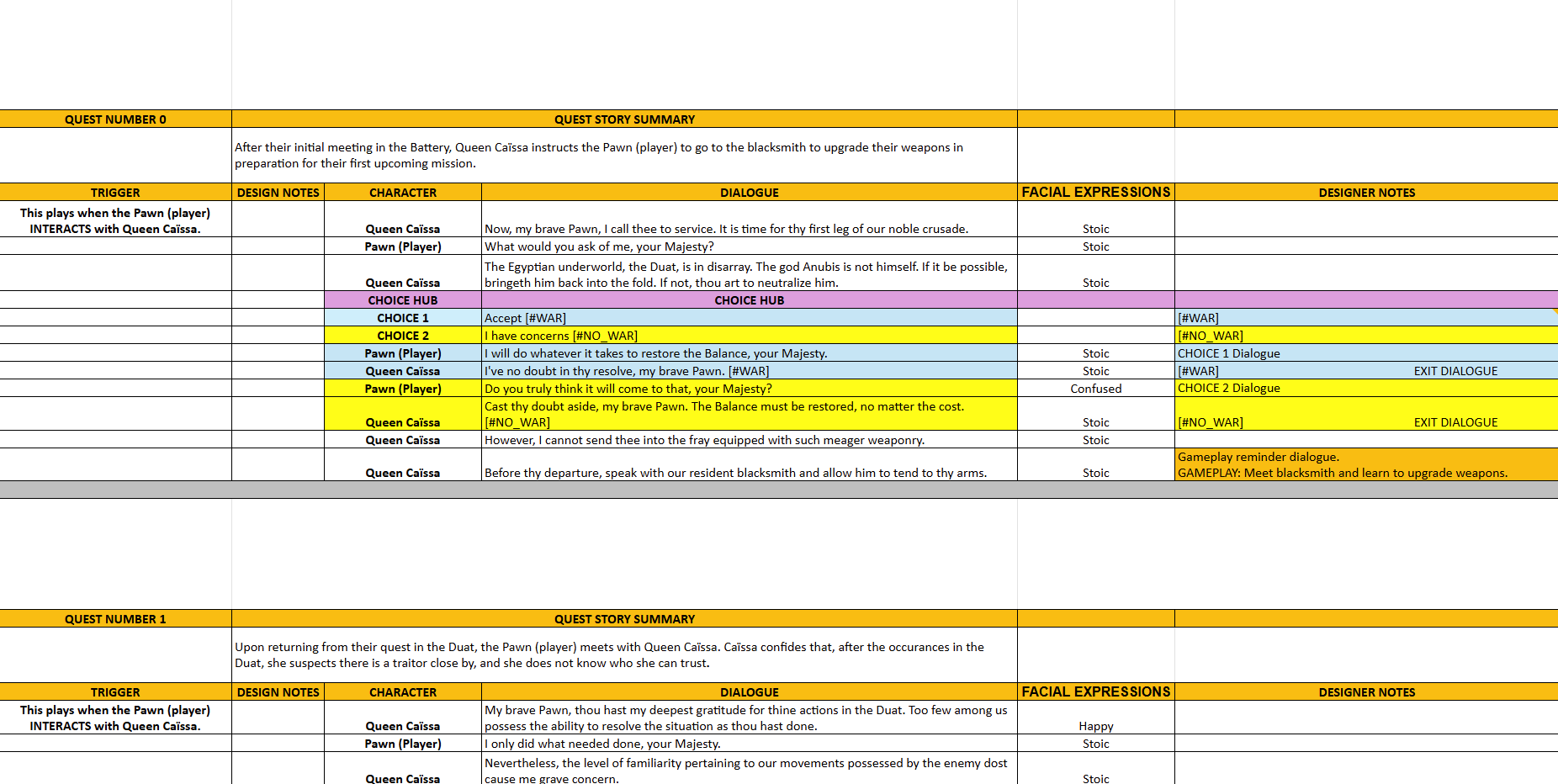
I designed a branching dialogue tree that responds to the player’s choices, allowing them to influence the conversation.
The branching dialogue was designed with the following considerations:
- Choice Hubs to present the player with different interaction options
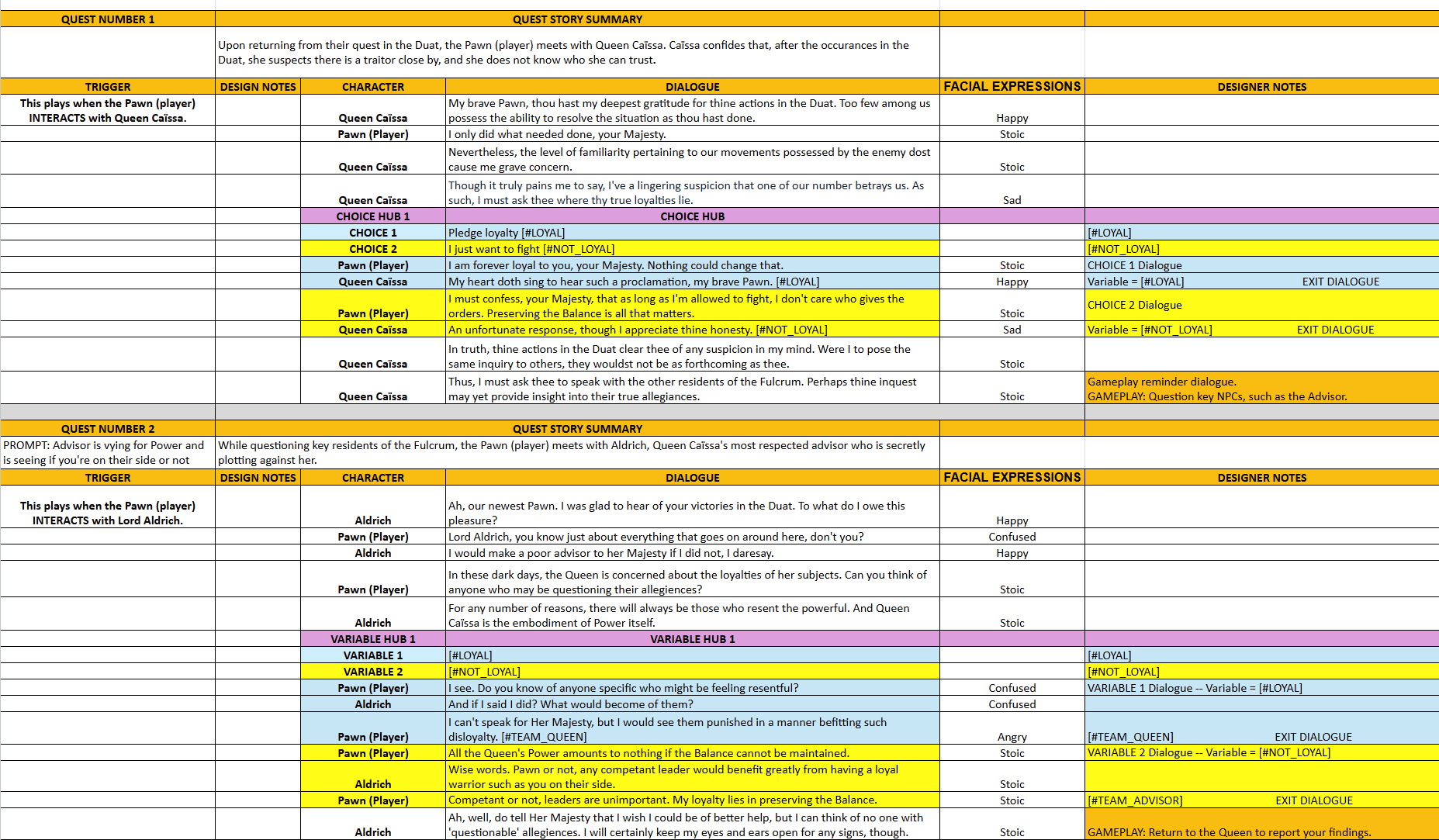
- Variable Checks to tailor the gameplay in real-time to match the player’s choices
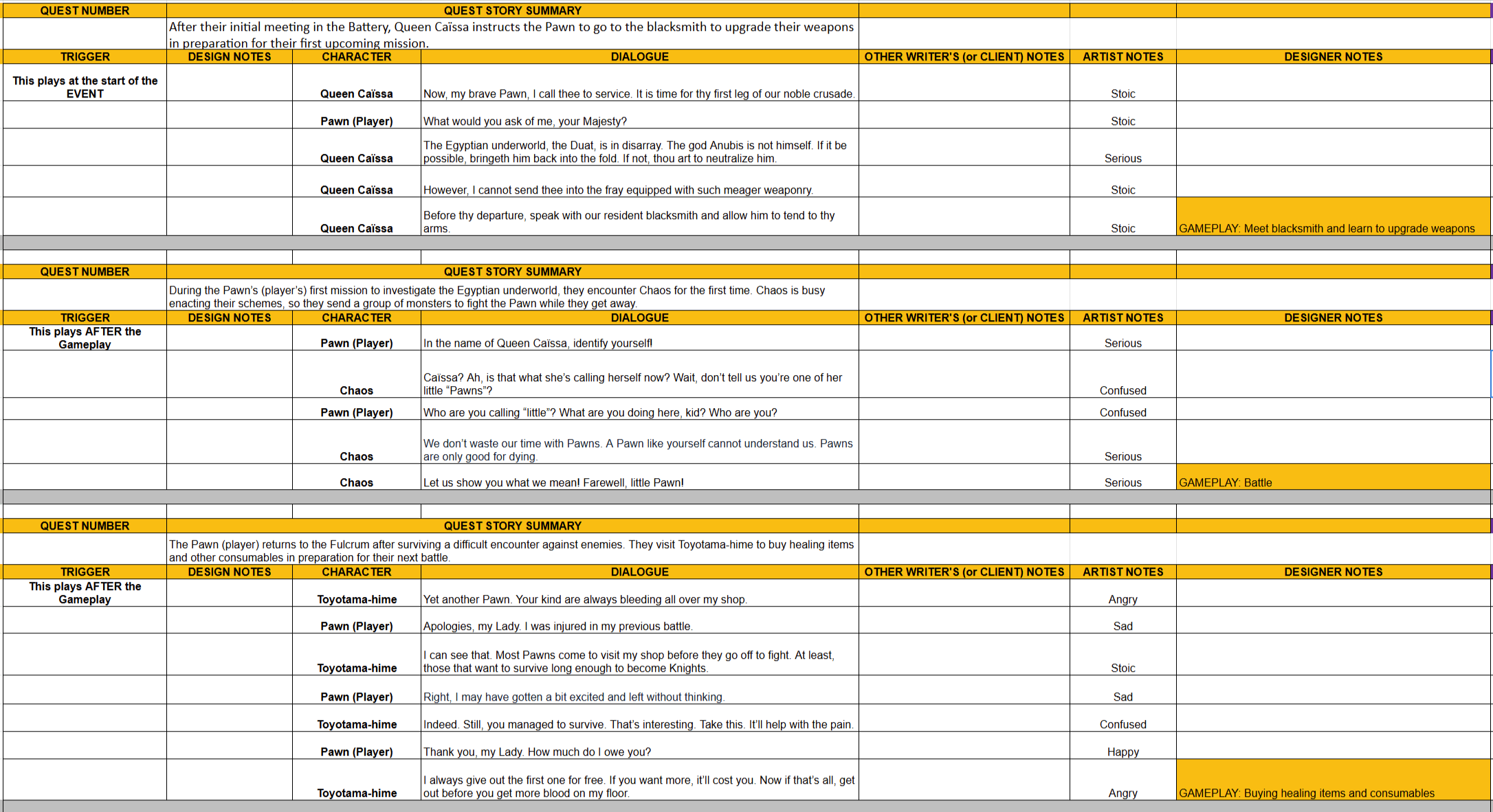
Linear Dialogue
I wrote and documented the scripts for linear dialogue threads.
These are dialogue scenes that:
- showcase a variety of character voices
- incorporate and enhance narrative elements to support the story, lore, and worldbuilding
- Guide players along the intended narrative arc while allowing for natural story progression
Storyboarding & Cinematic Script Writing
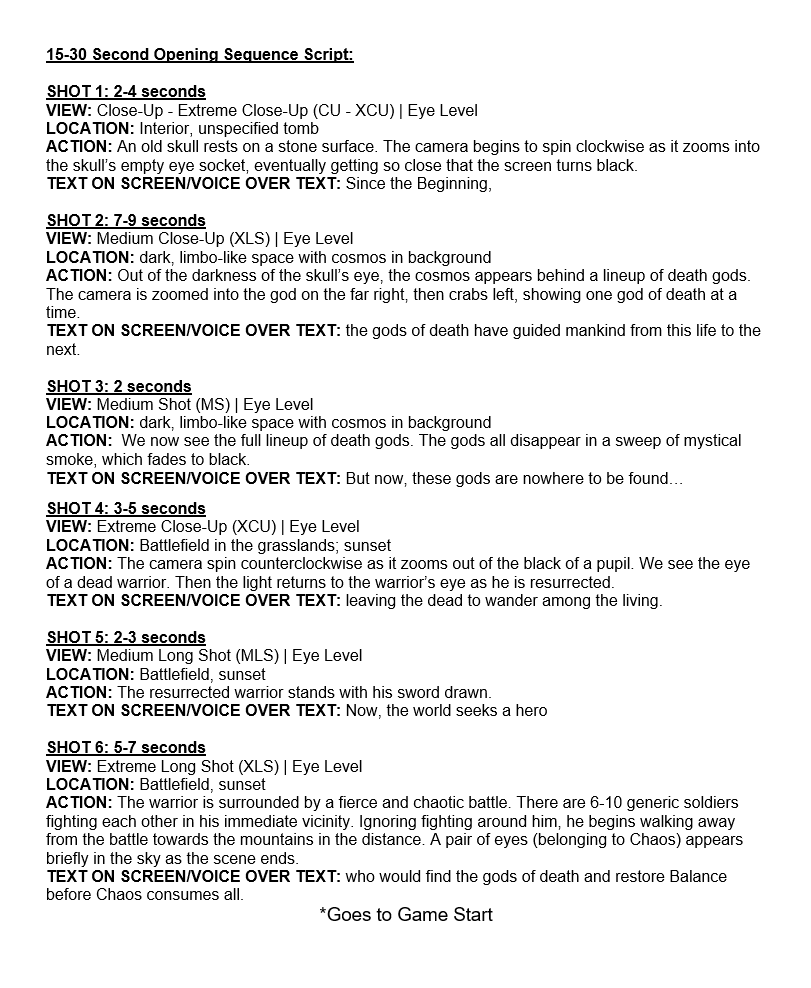
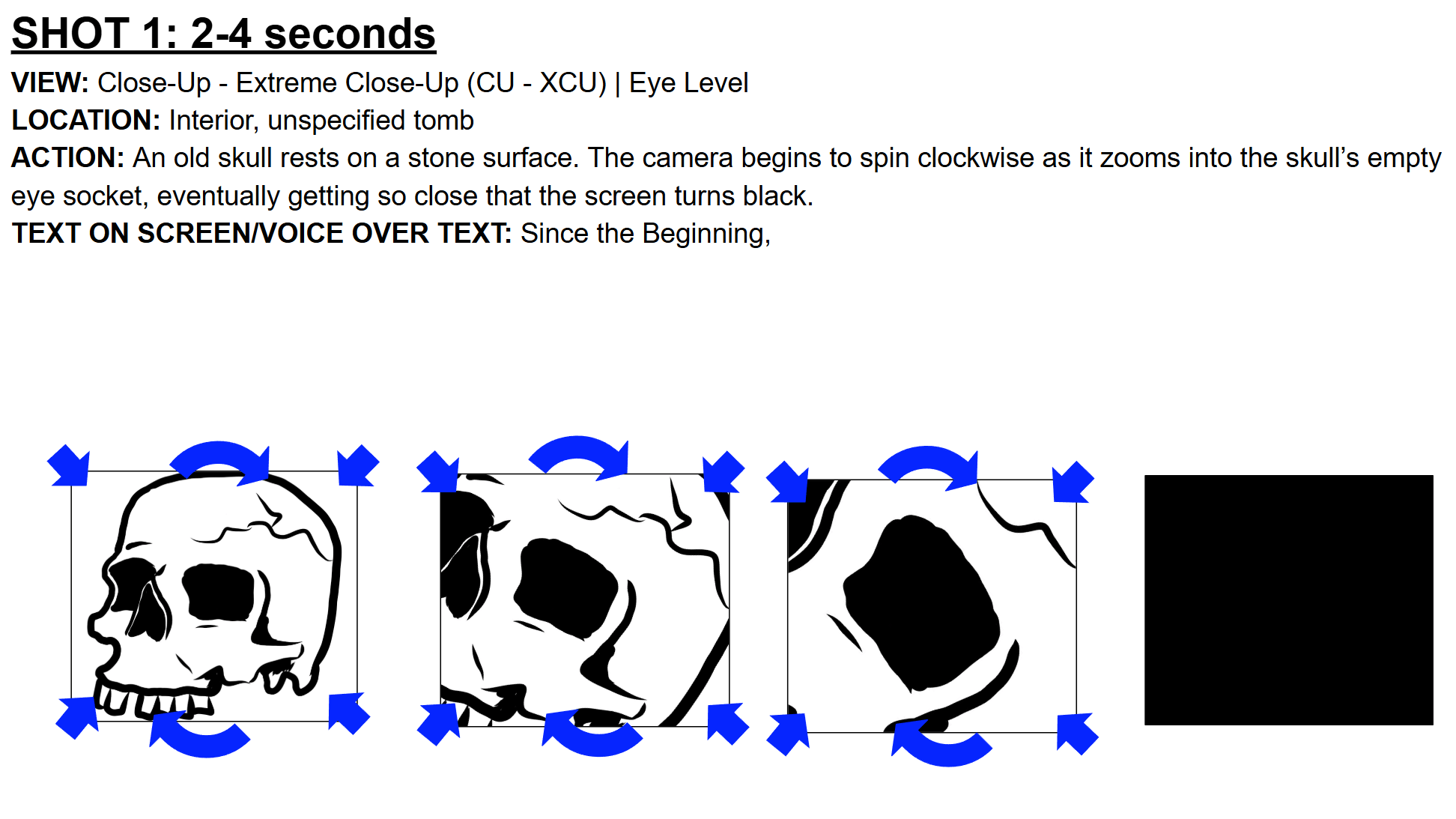
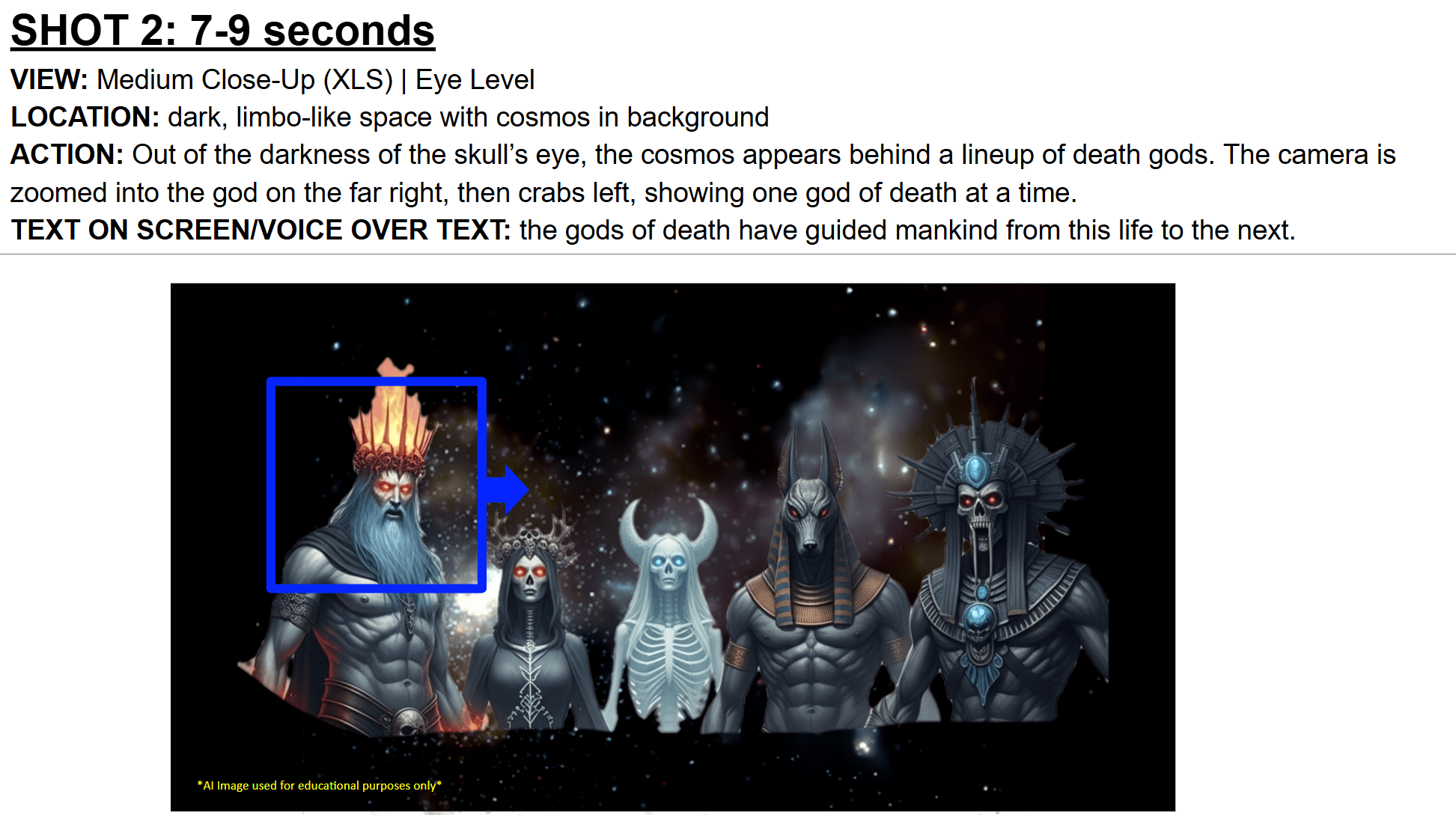
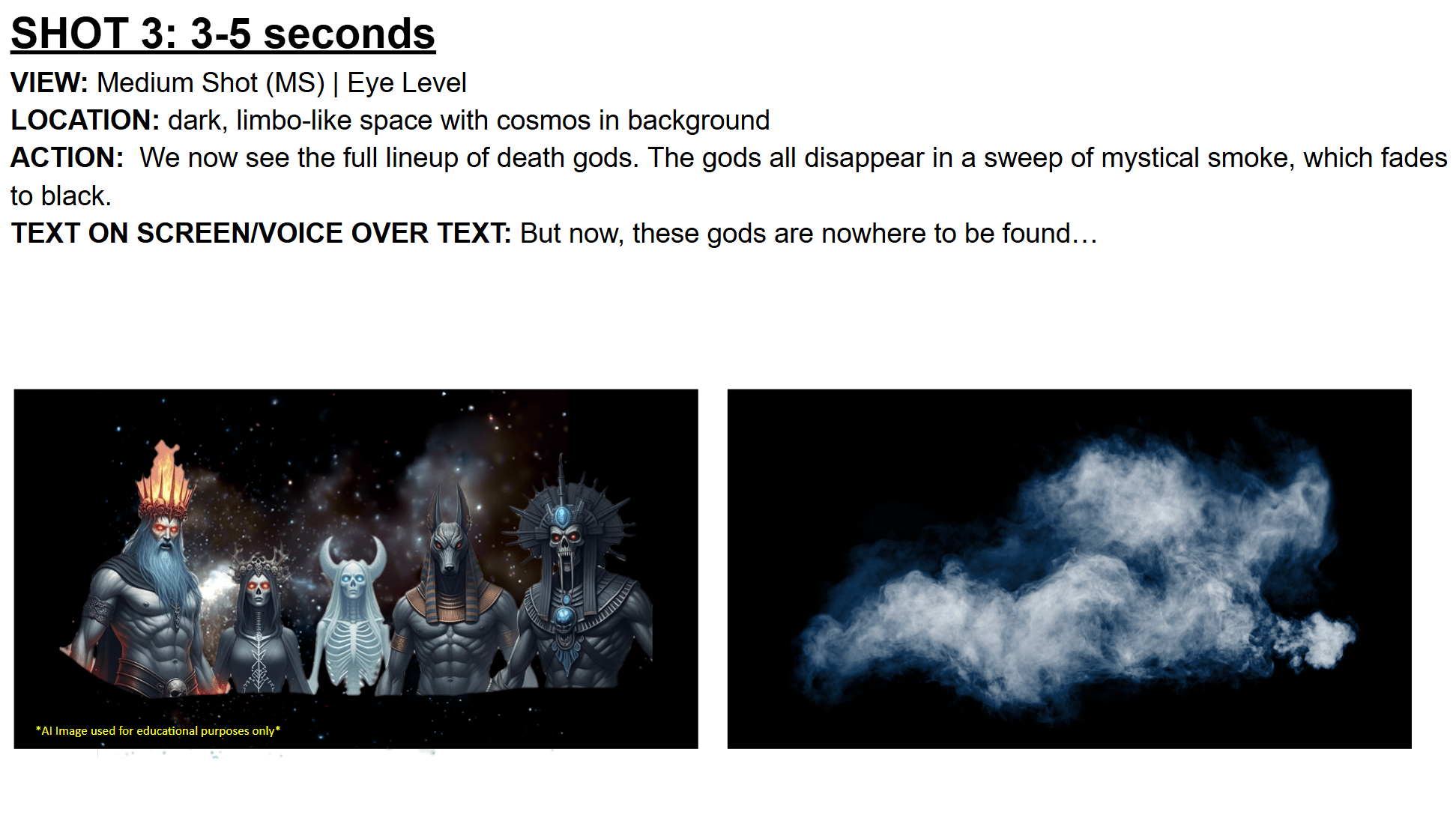
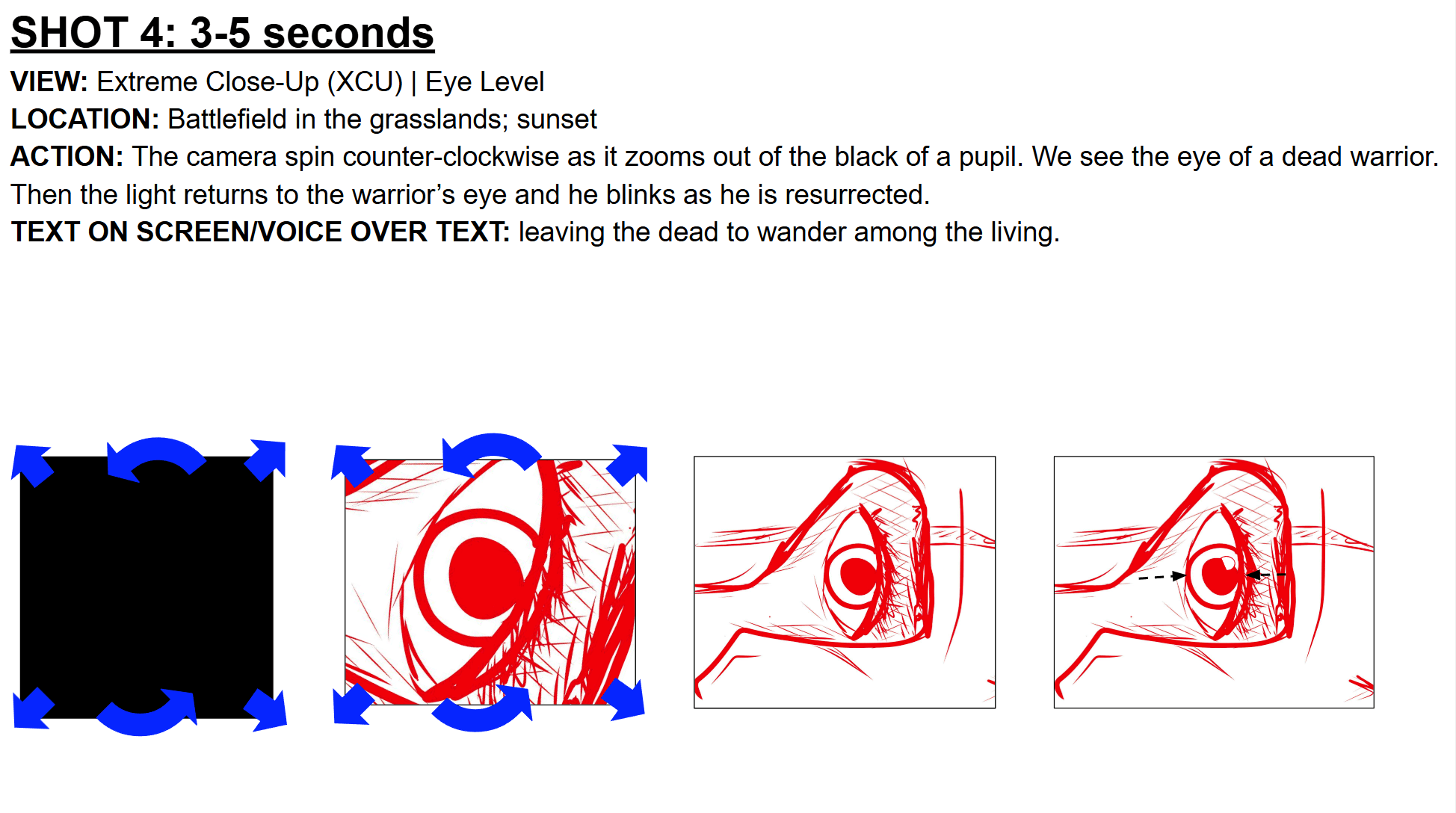
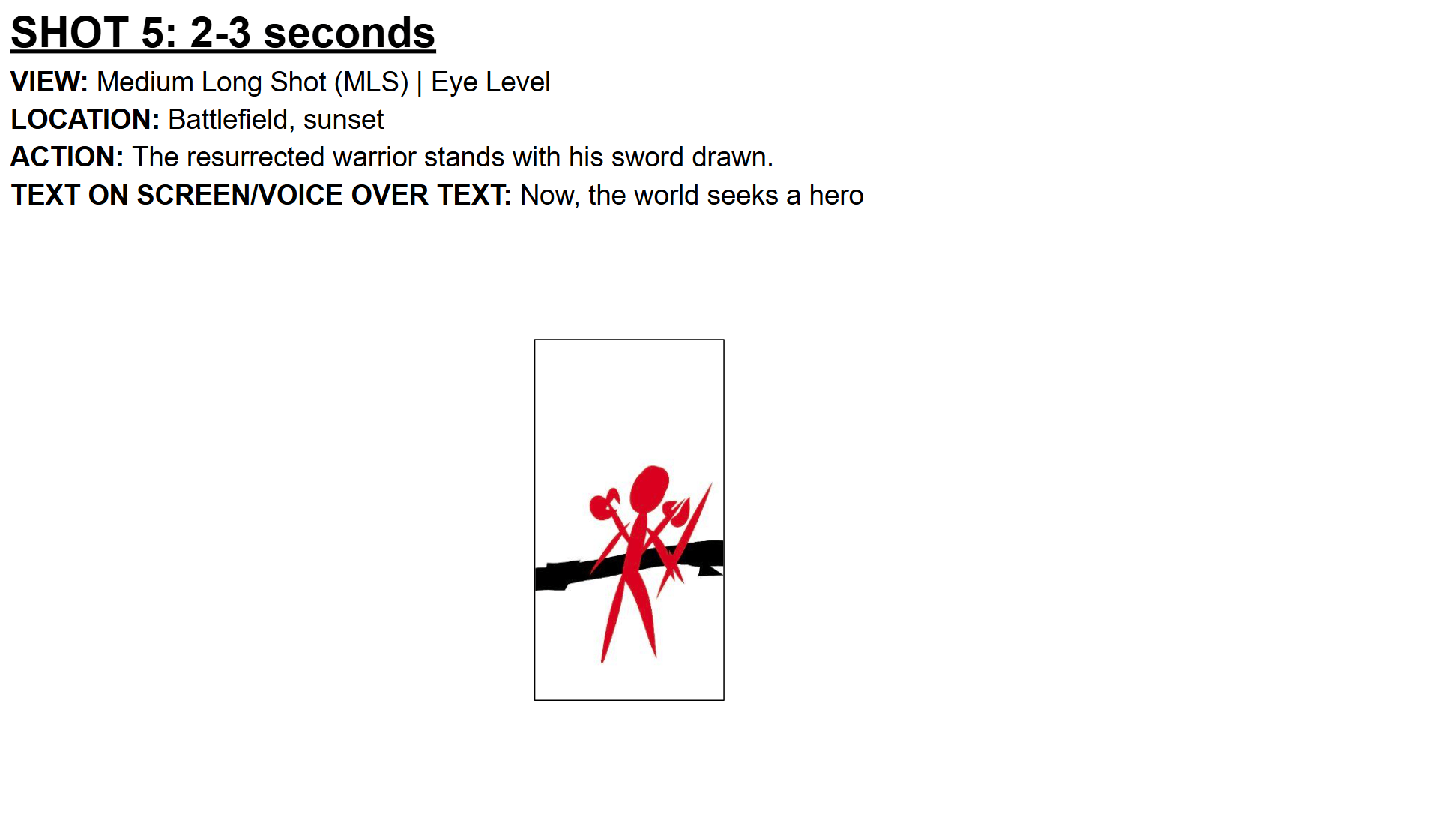
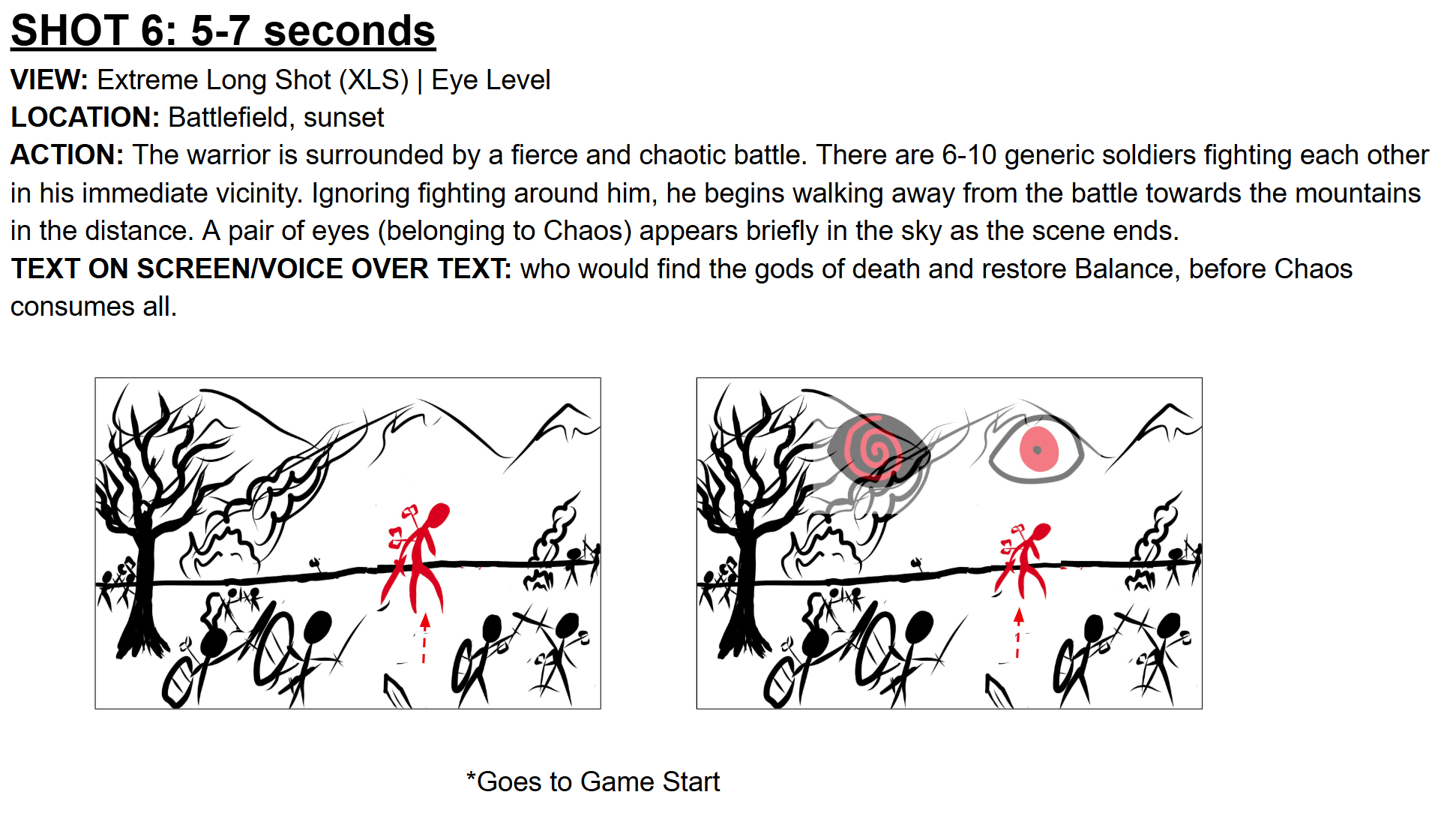
I wrote and designed a storyboard to illustrate and convey shots for the game’s opening sequence.
- Described shots with specific camera angles and locations
- Provided images to accompany each shot to assist designers along with action description
Voice Over Documentation
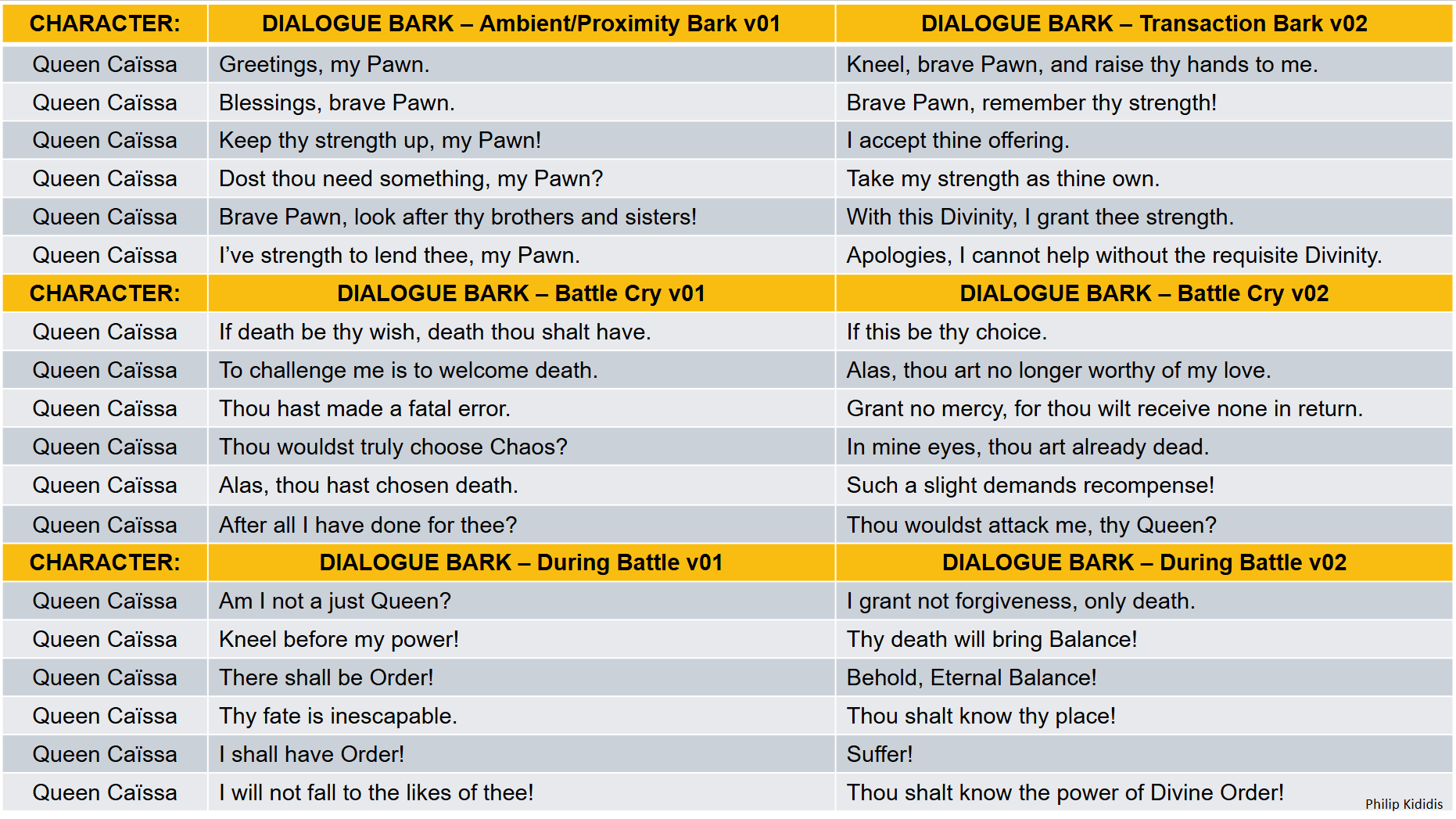
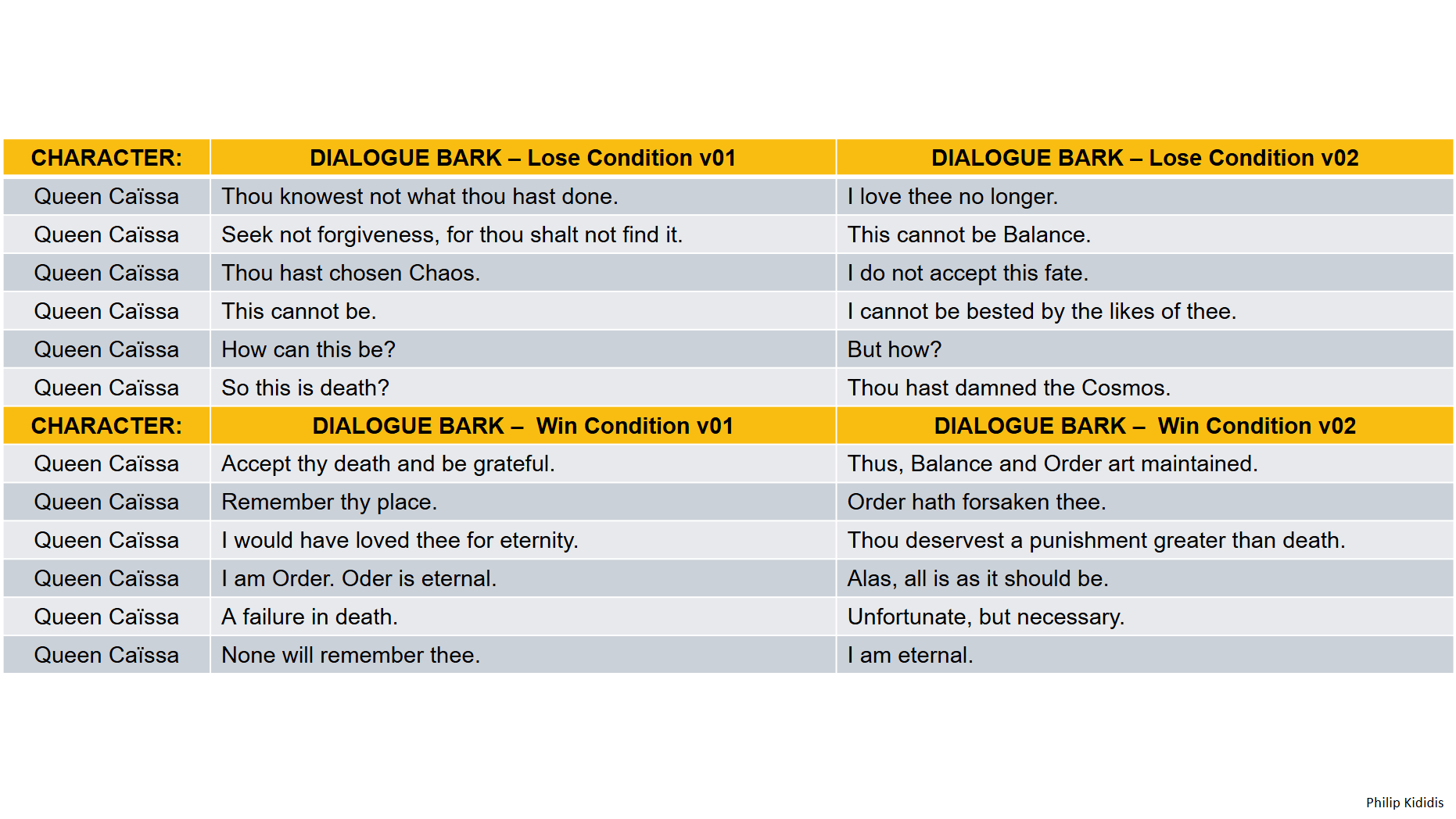
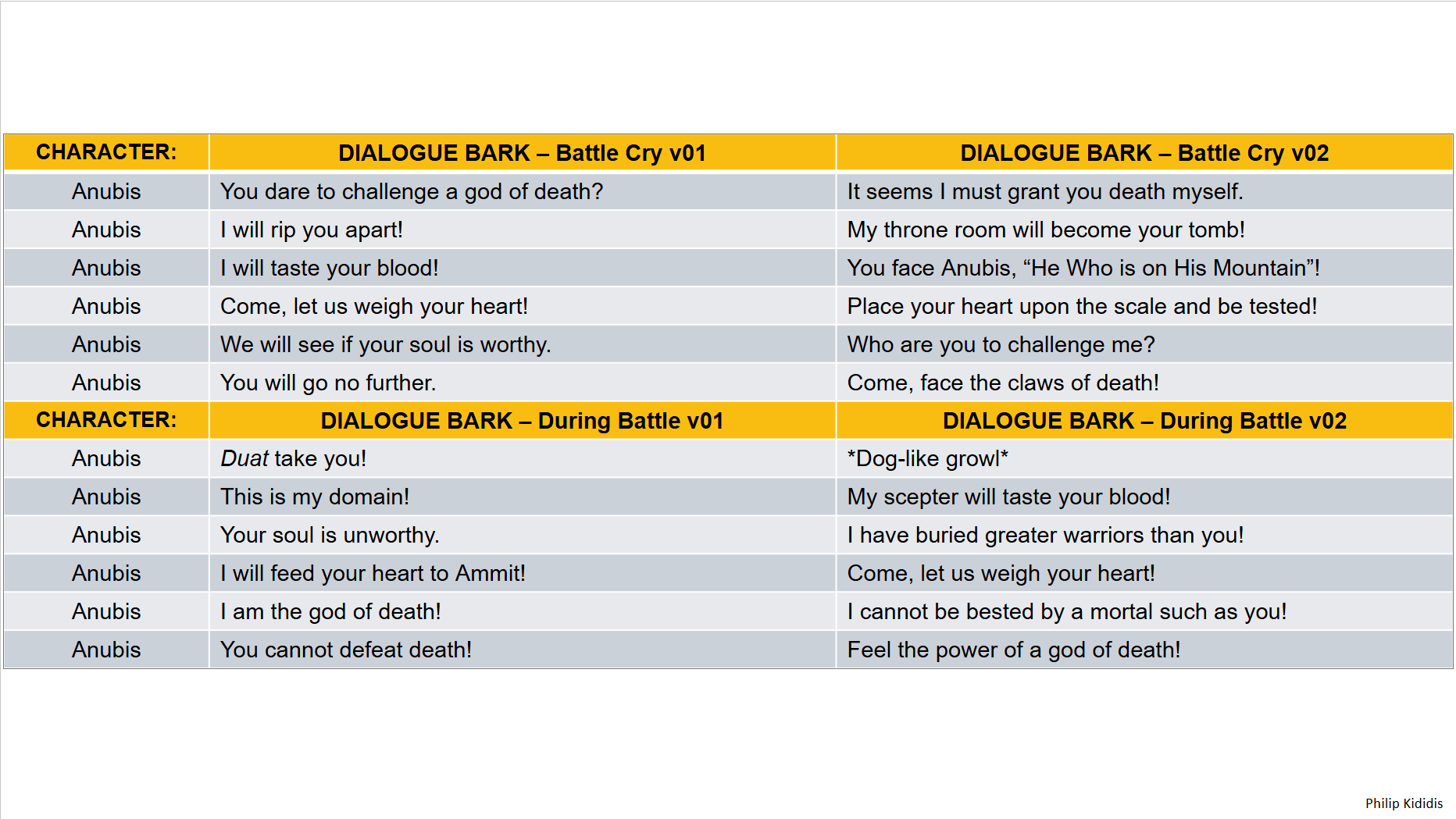
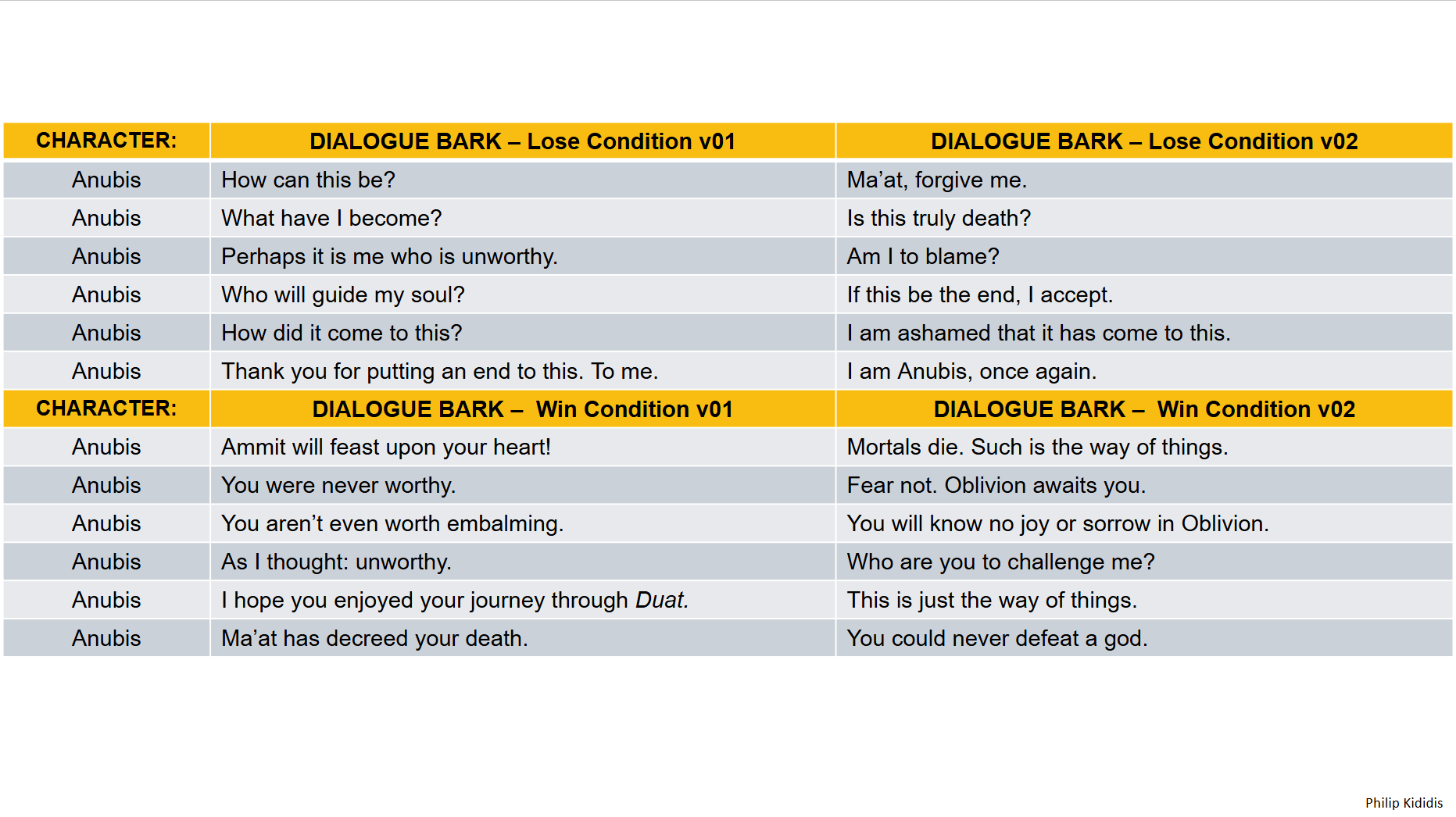
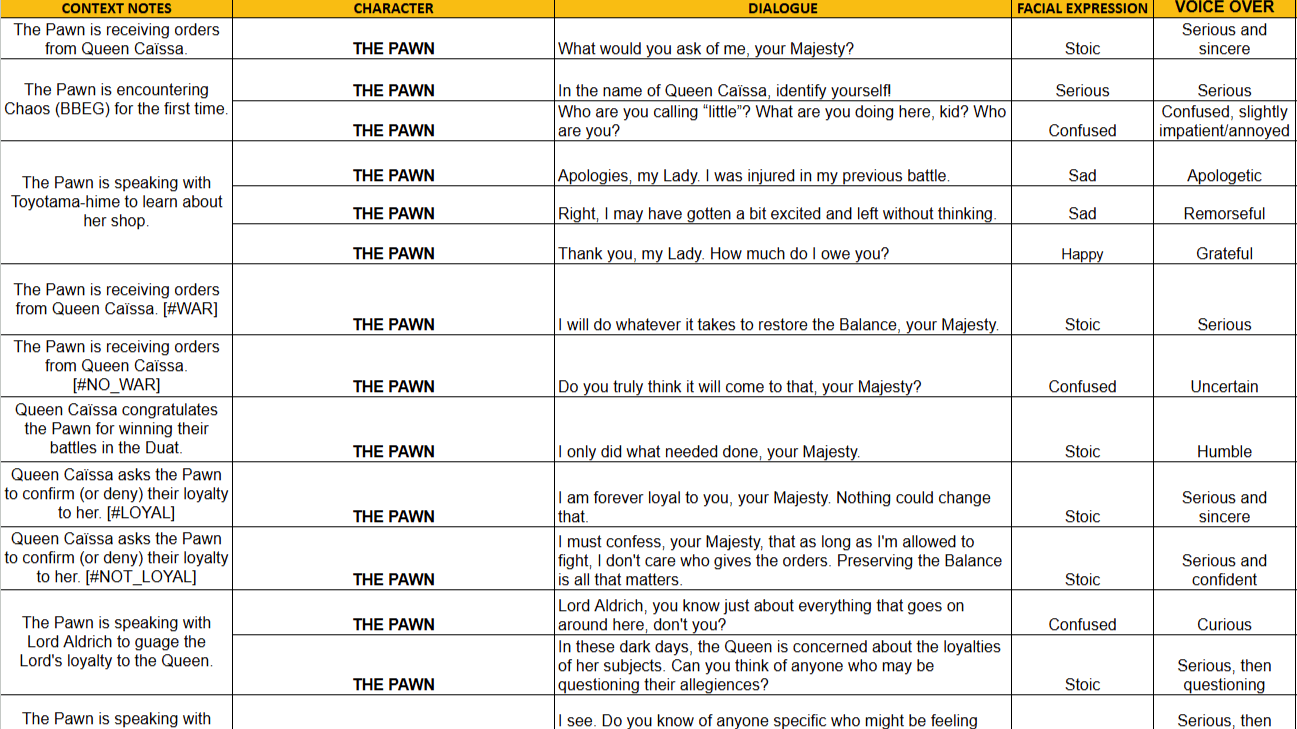
I wrote and documented the voice over documents, including:
- The master script
- The voice actor casting sheet
- Individual character scripts, with character bios and additional context to aid the voice actors